
5 Popular Christmas Butter Cookies Recipes | Making Cookies That Melt In Your Mouth
Christmas Butter Cookies
The most fundamental trait of classic butter cookies is their simplicity and their decidedly higher fat content, which sets them apart from other more complicated, heavily leavened, or dropped cookie formulations. This style of cooking also differs from other cookies because of the phenomenon of “shortness”, which is the term for the preferred tenderness of a baked good from a *shortening* fat. Short and crumbly biscuits are a *shortness* cooking duo, melting rapidly upon eating.
The medieval holiday custom of baking thick, rich biscuits spread and evolved as Christmas season spices and other *high* baking ingredients grew affordable and available around Europe. Christmas butter recipes inherited their quality from their urban setting as sugary- buttery biscuits were rare and high priced, creating a once-a-year baking. Recipes, from heavily spiced to plain sugar, evolved, as European biscuit baking custom spread from immigrants to North America, German settlers, and most significantly, Pennsylvania’s 1700 Christmas cookie dessert tray.
Bakers across the globe desire the rich buttery and soft texture of cookies, and they all rely on the same primary structural component, fat. These cookies, regardless of being rolled, cut, or pressed, have this same structural composition of fat.
The Role of Fat and Temperature in the Texture of The Cookie – At What Temperature Cookies Are Done?
Of all the ingredients, the highest scrutiny always lies on the fat. The fat is what creates the soft and delicate texture everyone loves in these cookies. As best baking practices dictate, the fat should always be unsalted. Using salted butter adds another layer of uncertainty in the baking process. Salted butter tends to have slightly different levels of sodium, courtesy of the variety of butter brands on the market. This can lead to added inconsistency in the cookies. This inconsistency can have dire effects on the final product, and can even result in high levels of salt being added to the cookies, and overpowering the cookies natural flavors. This is why buttering unsalted is the best baking practice. It is to maintain the consistency and accuracy of the recipes.
Also, the state of the fat has a big impact on the structure of the cookies. The state of the fat is also important when it comes to creamed dough. These dough include Spritz, Cutouts, and Tea Cakes. With these dough, it is important to use butter that is at room temperature.
This creaming process introduces tiny uniform micro-air voids into the fat matrix, which during baking expand to create lift and tenderness.
Yet, some additional subtleties during the preparation of butter cookies of superior quality arise from the fact that, although all five recipes are fundamentally butter cookies, the optimal state of the butter changes for the different texture targets, and differs significantly each time. For piping dough like Spirtsgebäck, the butter softens and creams to the perfect state to be able to press it through the tube. For rolled Cutout Cookies, on the other hand, the butter has to be creamed, then the dough has to be chilled aggressively to firm the dough to avoid spreading during baking. With some traditional shortbread as well, maximum “shortness” has been achieved by using partially melted butter, which, by quickly coating the flour particles and inhibiting the formation of gluten chains, leads to the ultimate melt in your mouth structure. This range of fat used from melted, too soft to firm is a major deciding factor for the technical editor in deciding the right approach for each biscuit type. With these high ratios of fat to flour used in the recipes, the flakiness of the texture is prominent, and the buttery flavor is vastly intensified.
Equipment and Preparation Logistics
The technical dependability of the cookie preparation greatly benefits from the presence of the right tools.
For bakers, a stand mixer is the most shandered kitchen appliance, as it provides the control, precision, and power to effectively cream unsalted butter and sugar at varying speeds, which is essential when baking multiple varieties of Christmas confections.
Preparation also dictates proper handling of the dough before baking. Many recipes call for preparing baking sheets by lining them with parchment paper or a silicone mat. This detail not only stops the cookies from sticking, but also helps in distributing and balances the heat evenly at the bottom of the cookies, making them perfectly golden. Furthermore, it makes it really simple to transfer the cookies to a cooling wire rack. Using a wire rack to cool is very important, as it provides separation for the cookies, allowing steam to escape. This helps to prevent condensation from forming, and ensures that the cookies steam properly as they cool completely.
Shortbread | The Scottish King Of Crumb
History | Tradition| An Ancient Luxury
Shortbread’s long-standing history began in Scotland, and Scotland alone. Its simple recipe may sound prejudicing of the luxurious shortbread of today, but that recipe contains a disproportionately large amount of butter than what any shortbread recipe has today. The old Highlander Scottish shortbread recipes even featured the use of ground oats or rice flour, in addition to their wheat flour, but that wasn’t as a flavor addition. Instead, their purpose was technical: to increase the density and to clump together the characteristically crumbly shortbread.
Taste Profile| Pure Buttery Indulgence
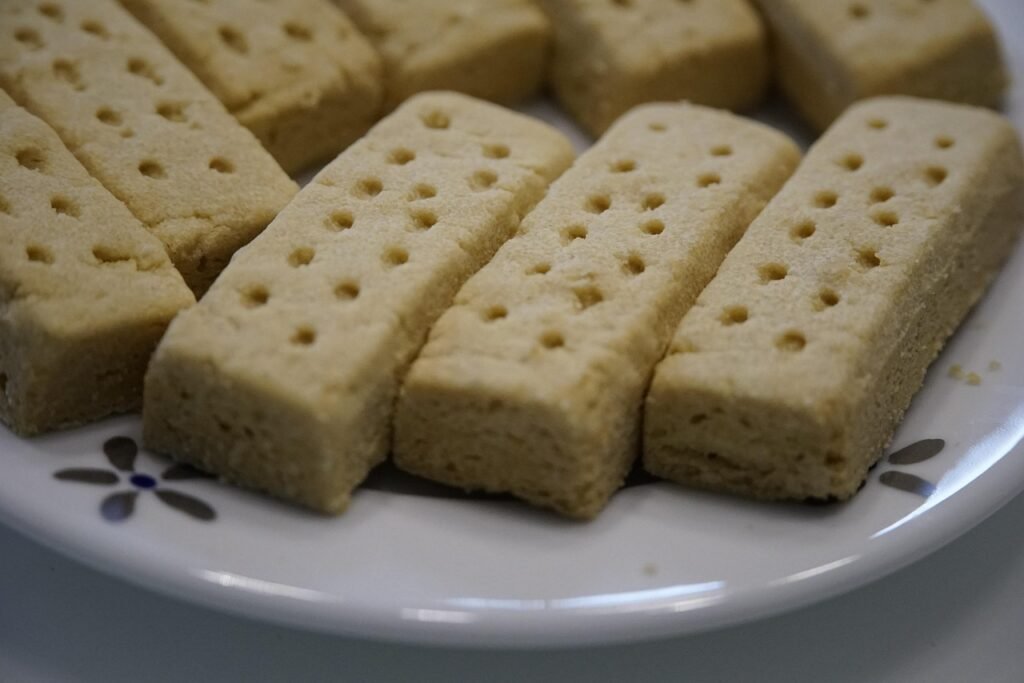
The richness and structure of the shortbread alone encompasses the sensory profile of the food. The shortbread is supposed to be dense, but there’s supposed to be a crumbly texture as well. This is where the name derives from, as the short in shortbread is a word that means tender and their bite is supposed to melt in the mouths of the eaters. A lot of modern versions include a softening agent, starch. This works because starch is a softening agent that weakens the gluten protein chain formation that typically occurs, resulting in “more shortness”. The flavor, in addition to the texture, is supposed to be very simple, but very buttery in a way that is unparalleled to any other shortbread.
Even the tiniest amount of salt is necessary because it neutralizes the sugar’s sweetness and helps bring out the richness of the unsalted butter.
The Master Recipe (Shortbread)
The aim of this recipe is to maximize the ratio of fat to flour in the shortbread formulation.
Ingredients (Approximately 10 – 15 Servings)
- Unsalted Butter: Approximately 550–600 grams (The quality and taste of the butter get better when it is softened or melted, is kept at room temperature, and has less air whisked in).
- All-Purpose Flour: 600–650 grams or around 4.5 to 5 cups (Note that the entire quantity is to be suppressed and leveled off at the top of the measuring cup, not packed in).
- Granulated Sugar: 200–225 grams (1 cup) also known as caster or super-fine sugar).
- Flavoring: Natural Vanilla is of 3 teaspoons in the form of extract/paste or else in large vanilla beans scraped off the top to use the seeds.
- Salt: Approximately 1 teaspoon (just a big pinch).
Preparation:
Prepping the oven is most easily done by practicing the appropriate temperature of 325 degrees Fahrenheit, meaning it needs to preheat to 165 degrees Celsius.
Mixing:
The whole process requires very careful mixing of the fat, as the goal is to minimize air. Using a stand mixer with a paddle attachment will work best, although removing air can be accomplished by some simple work with a wooden spoon. The fat (metal, soften, or sometimes melted) is combined with sugar and flavorings, such as natural vanilla. The dry ingredients (flour and a pinch of salt) are then added and mixed, though not as much as the average dough. Instead, they are mixed together to the point of being absorbed with the rest of the ingredients as the clumpy dough will be formed and maintained.
Forming:
The clumps of dough are then shaped into a disk or rolled piece and fit into the parchment paper line baking sheet.
Baking:
The baking sheet with the thick disk on it will be placed in the oven to complete the long wait of 35 to 40 minutes baking.
Finishing:
The cookies will be placed on the rack, and the squares or rectangles will be cut into.

Spritzgebäck | Pressed Biscuits of Viennese Elegance
History| Cultural Reach| Pressed Biscuits
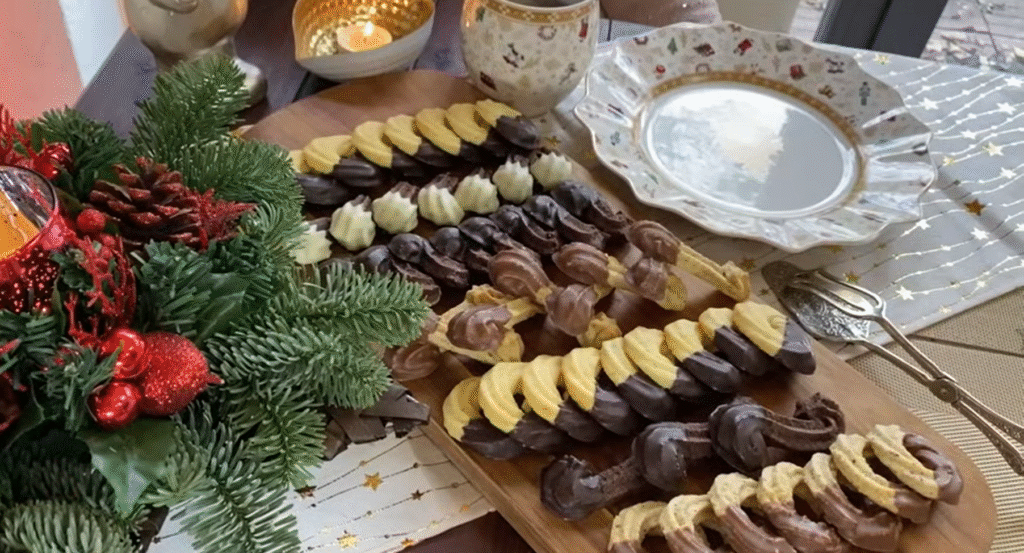
Spritzgebäck is translated to pressed biscuits or hand pressed biscuits. The name and recipe derive from the Viennese tradition of Austria, although it has adopted a modern place in the European pastry tradition. The butter cookies are directly correlated to the mass production and the use of the cookie press; the tool empowers the baker to shape the flexible and richly assembled cookie dough uniformly to form detailed designs.
The cookie press was first invented in Austria, and the craft has spread across different Austrian and Scandinavian traditions, where similar varieties of the cookies can be found, including the Danish Spritz and the Kransekage. These cookies are culinary classics- preserving the delight of the aged culinary traditions while gaining popularity as culinary classics throughout the years, particularly in the festive seasons.
Taste Profile| Crisp Snap & Fine Crumb
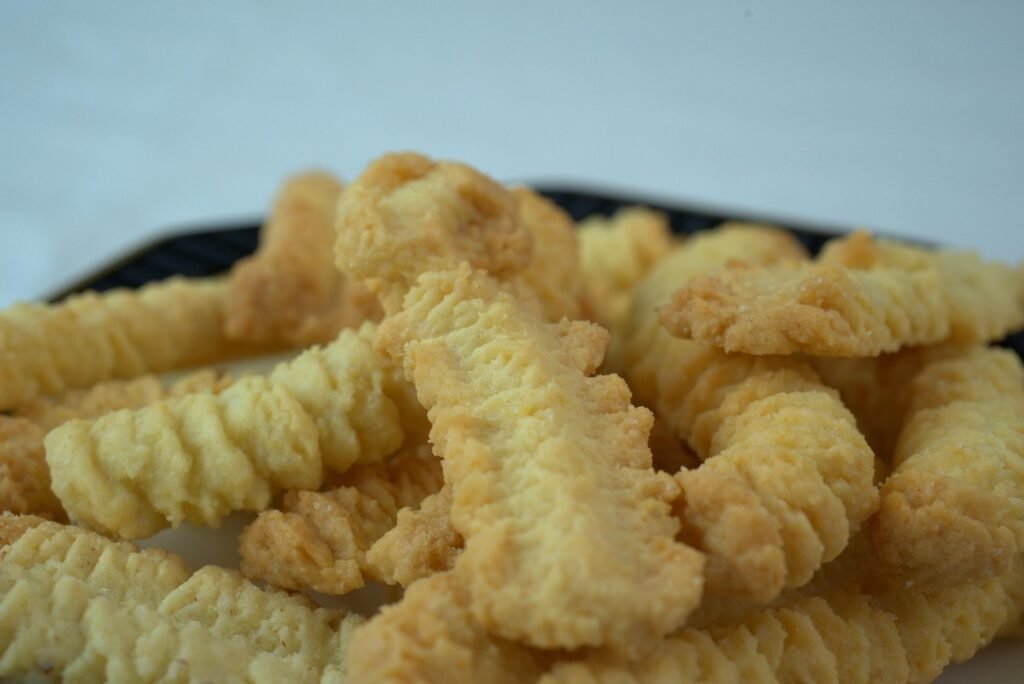
The exited Spritz biscuits are defined by their equally detailed, fine, and well-structured extruded shape and by the snaps that are broken by the round and brittle biscuit upon being bitten into. The mouthful and texture of the biscuit are fine and crumble, so the high butter density results in a soft and expanded larger biscuit that exists intact. The battered outcome also results in a soft and large mouthful, while the butter is substituted to a high density of sugar, the mouthful becomes brittle and fluff through the areated sugar, and is finished with a glazed coating, broken by a fine snap of crisp biscuit that expands into a crumble texture complemented with a butter a creamy to a deeper mouthful of the blend of the soft and sweet sugar with the vanilla that is almond to the reunison of the biscuits to a festive profile.
The Master Recipe (Spritzgebäck)
The Spritz cookies presents a technical recipe challenge to balance the pliability that is necessary for the dough to easily flow through the press with the consistency.
Ingredients (Approximately 10 – 15 Servings)
- Unsalted Butter: 450–500 grams or 4 standard sticks (Butter must be compromised, but must be softened in order to whip and cream it at the first stage fluffy).
- Granulated Sugar: 200–225 grams (1 cup) also known as caster or super-fine sugar).
- Eggs: 3 divided large (one at a time).
- All-Purpose Flour: 550–600 grams (Added flour in low particle and in small quantity, and at this stage combined).
- Salt: 1 teaspoon also the one to be added along with the flour.
- Extracts or Flavorings: 1 tablespoon of Vanilla Extract, also combined with 1 teaspoon of Almond Extract (Optional, but a common tradition flavor).
Preparation:
Preparation of the ingredients especially unsalted butter must be done first. The process begins by creaming the unsalted butter and sugar with a stand mixer until fluffy. An egg and some extracts are mixed in and beating continues until the mixture becomes a creamy consistency.
Mixing:
The remaining ingredients are mixed in with the butter mixture slowly. Gradual additions of salt and flour are mixed in until just combined. Importantly, the dough is not to be chilled. Otherwise, the dough will become too stiff for the cookie press and the defining shapes will not be able to form.
Forming:
The pliable dough is immediately placed in a cookie press and pressed directly onto a baking sheet that is not greased or is lined with a non-stick liner (parchment paper can cause release issues for the press). The press has excellent shaping ability combined with the lack of a chilling step which makes this method the fastest way to make large quantities of Christmas cookies in less than a half hour.
Baking:
The cookies keep the shapes that they are pressed in to so there is no additional forming required. The baking time is short; they go in a preheated oven and are cooked for 8 to 10 minutes, or until the edges of the cookies just begin to turn golden brown. The loose and delicate high fat structure is burst cooked which means that they are set really quickly which minimizes the amount that they spread in the baking process.
Finishing:
They cool on cookie racks to prevent steaming. They have to cool completely before putting additional items such as chocolate or jam on them, if desired.
Linzer Cookies| The Jewel-Toned Sandwich
History| Legacy| The Torte’s Descendant
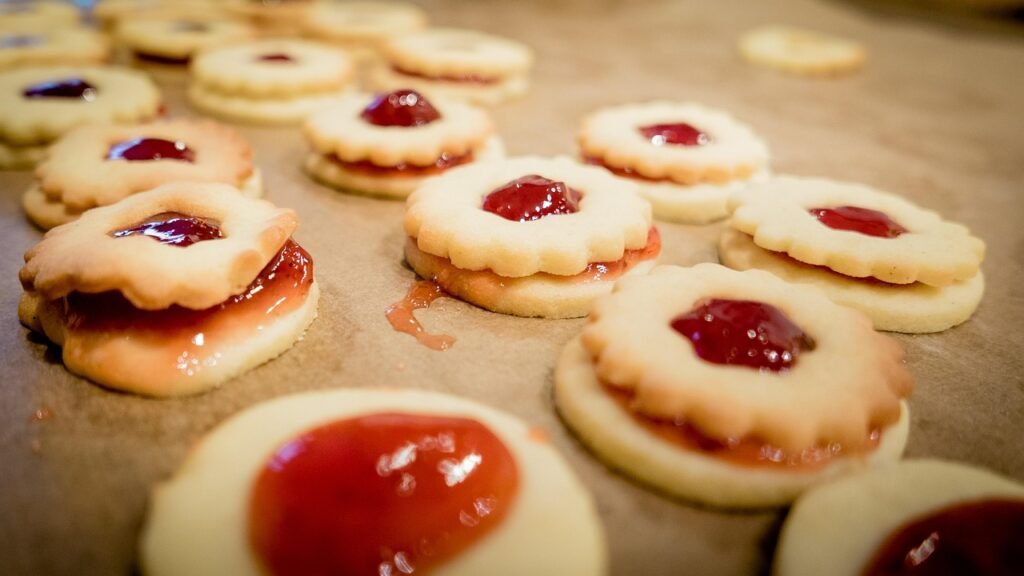
In Central European Advent baking, Linzer cookies are called Linecké cukroví in the Czech. This charming sandwich cookie represents the heritage of Linzer Torte, one of the oldest, if not the oldest, documented recipes for a tart in the world, dating back to 1653 in Austria.
These cookies are a more portable and smaller version of the torte and preserve a rich, nutty, spiced crust, and a layer of tangy fruit filling as components. In Central Europe, the baking of these cookies for Christmas has become a cultural tradition with hundreds, if not thousands, of families baking gaily decorated cookies over the holiday Advent to make large, extravagant collections, and to give ten or more different varieties of cookies to be shared in the holiday spirit.
Taste Profile| Spiced Nutty Balance
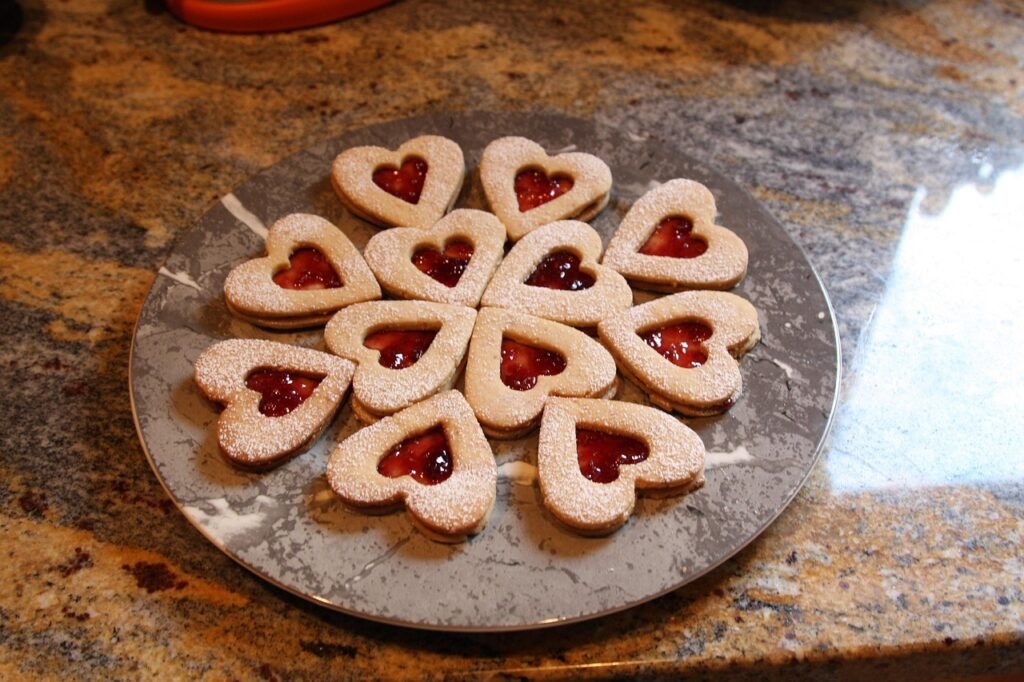
Linzer cookies are a well-studied and appreciated baked good. The construction of the cookie is the result of a complex and sophisticated development process, to have a rich spiced filling (often of fruit or jam) in the center of a tender, crisp, and, relatively, thick ring of cookies made of unsalted butter dough and ground nuts, usually almond or hazelnuts, and a warming, buttery spiced dough. These cookies also carry a warm, buttery, and vanilla taste. The filling is what primarily defines the cookie, as it is fruit-flavored and tangy.
The filling of choice for this biscuit is customarily raspberry jam since the acidity contrasts the nuttiness of the biscuit filling. An apricot filling or redcurrent gel is also popular filling choices. Another highlight of the biscuit is the small cut-outs decorated in various shapes like hearts or stars which provide a glimpse of the finish product and jam.
The Master Recipe (Linzer)
Linzer is a dough where significant butter and nut meal is added which requires a more temperature sensitive us flow for mixing and meshing the components to create the batter.
Ingredients (Approximately 10 – 15 Servings)
- Unsalted Butter: 450 – 500 grams or 4 standard sticks (Used cold or slightly softened for creaming.)
- Granulated Sugar (or Superfine Sugar): 150 – 180 grams.
- Nut Meal (Almond or Hazelnut): 200 – 225 grams or 2 cups, finely ground. (This is a defining ingredient for flavor and texture.)
- All-Purpose Flour: 350 – 400 grams.
- Egg Yolks: 3 large (Added for binding and richness).
- Spices: 1 teaspoon Ground Cinnamon (Traditional Linzer spice).
- Half a teaspoon Baking Powder (For slight lift).
- Pinch of Salt.
- Filling and Topping: Seedless Jam (Raspberry or Apricot): 1 large jar.
- Confectioners’ (Powdered) Sugar: (for dusting the tops).
Preparation:
The process starts by placing the dry ingredients (flour and salt, baking powder, and spices) in a bowl. The nuts, which are ground with sugar, help with the mixture’s consistency. The sugar and butter are placed in a stand mixer and whipped. Due to the mixture’s high fat to sugar ratio, the mixture won’t get too aerated. The remaining ingredients, the egg yolk, and butter, are added in.
Mixing and Chilling:
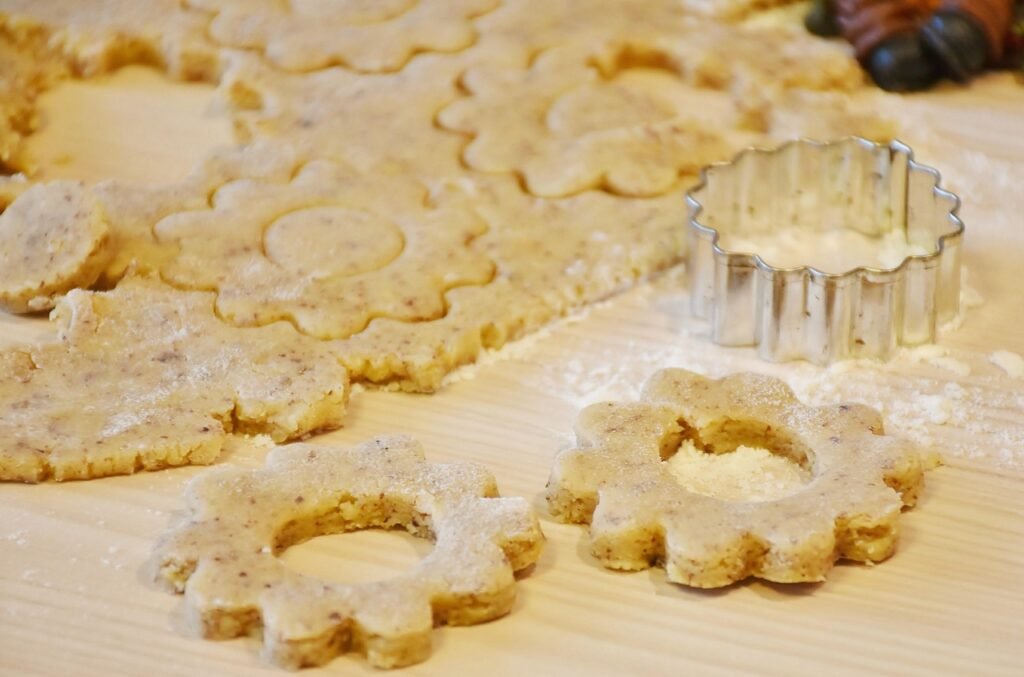
The nut mixture should be added in, and then the flour and salt should be added in. The dough is very high in fat. This is a problem because to roll and cut into shapes the dough needs to be very chilled which can take hours to overnight.
Baking and Assembly:
The dough should be Cut into several shapes and cut down the middle (these are the cut shape decoration shapes). With parchment paper they are moved to a baking tray. The baking is done at 350°F (175∘C) for 10-15 minutes. The edges should be light brown when done.
Finishing:
Once the cookies are fully baked they shouldn’t be removed for 30 minutes because they need to finish baking.
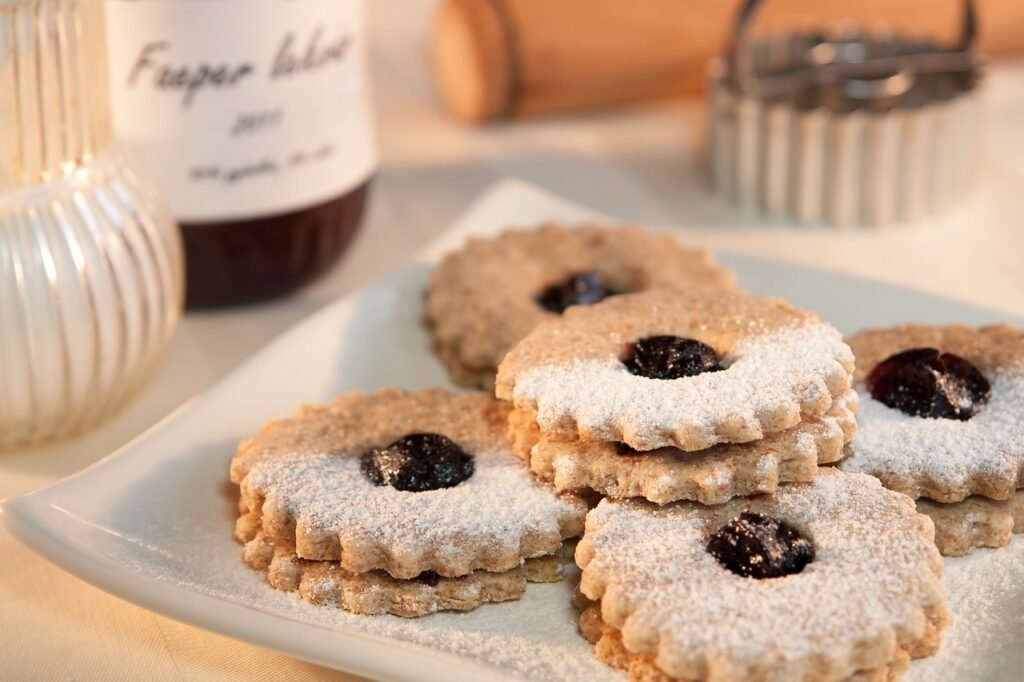
After the cookies have cooled, they can then be assembled. The cookies with the bottom bases have jam thickly spread on them, and then the other cookies are topped on them creating a layered cookie with filling. The remaining cookies are topped with powdered sugar.
Russian Tea Cakes (Snowballs)| The Nutty Spheres of Powdered Sugar
History| Nomenclature| The Universal Shortbread Derivative
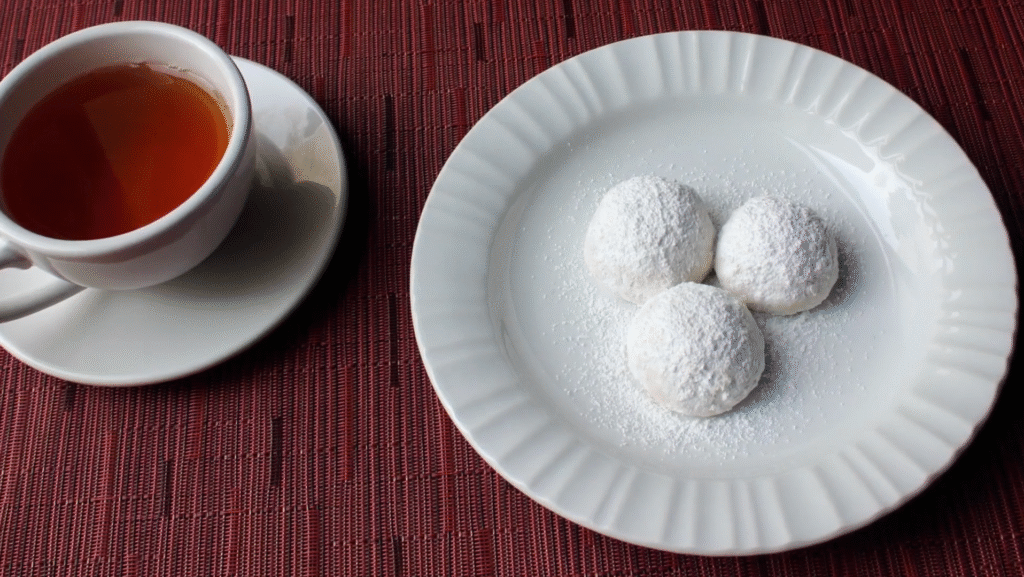
A world grandchild of the shortbread family Russian Tea Cakes affectionally called Snowballs and, in parts of the world, the Mexican Wedding Cakes, are a world-famed variation and loved by many. While one would think such a name would make the cookie complex, they are in fact known for their simpleness both in ingredients and recipes but, with a taste and richness like no other. A beloved cookie of the holiday season, these cookies are adored for their melt in the mouth, tender consistency (unlike the dry, dusty cookies one would usually expect).
Taste Profile| Rich Interior| Cloud-Like Exterior
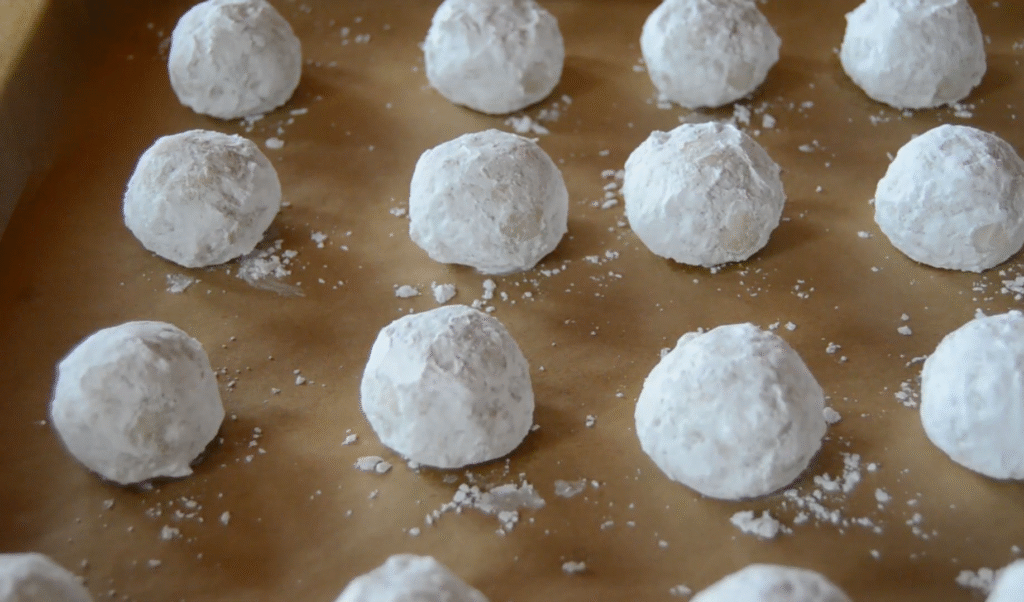
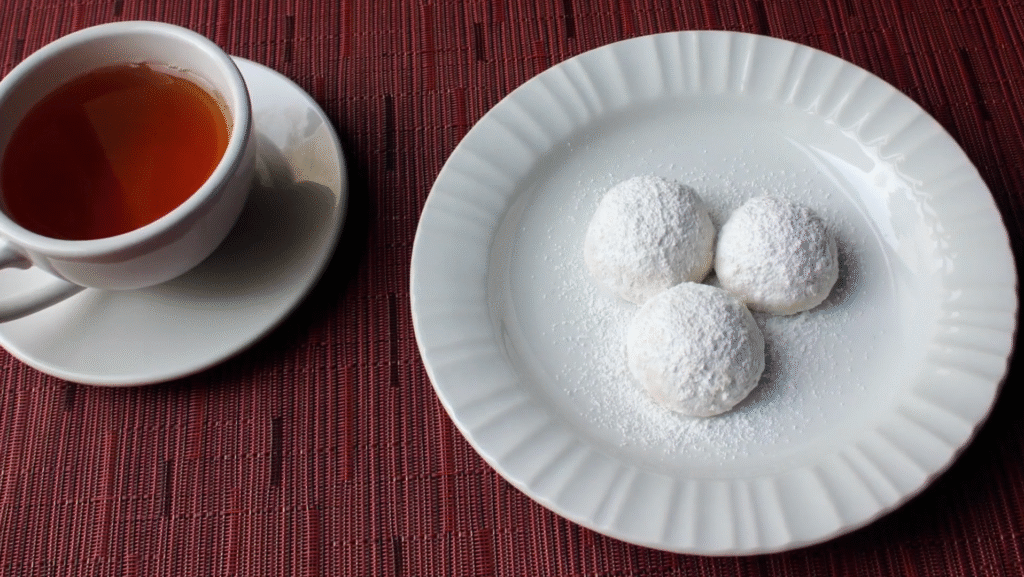
The richness from both the fat and the variety of nuts added is what dominates the sensory profile of this cookie. It has a soft, tender, and airy, but yet dense, interior caused by a high volume of nuts (walnuts/pecans) and butter. This cookie is known for its outer appearance and texture. It has a cloud like appearance, with a signature powdered sugar outer coat achieved by rolling the cookie in powdered sugar after and prior to they are completely cooled.Vanilla extract enhances the deep, earthy pull and rich buttery nuances the nuts carry.
The Master Recipe (Russian Tea Cakes)
This is the only cookie recipe with the technical feature of dusting with powdered sugar twice, making the presentation of “snowball” effect even better.
Ingredients (Approximately 10 – 15 Servings)
- Unsalted Butter: 450 – 500 grams or 4 standard sticks (Must be at room temperature for proper creaming.)
- Confectioners’ (Powdered) Sugar: 1 cup (Used in the dough itself, not just for the dusting.)
- All-Purpose Flour: 450 – 500 grams (Drizzled in slowly and mixed until just combined.)
- Nuts (Pecans or Walnuts): Two cups, finely chopped (An essential element for both taste and consistency.)
- Flavoring (Vanilla Extract): Two teaspoons.
- Salt: ½ tsp.
Finishing Touch (Double Roll)
- Confectioners’ (Powdered) Sugar: 4 cups (for rolling dusting) dusting. (Very large amount due for double rolling technique 1st roll while warm, 2nd roll once fully cooled.)
Dough Mixing:
Preheat the oven to 400˚F (200 ˚C). In the stand mixer set the room temperature butter to cream, then add in the powdered sugar and vanilla and cream until smooth. Slowly drizzle in the flour, then the salt and the chopped nuts, mixing until the dough just comes together.
Forming and Baking:
The dough is rolled into 1-inch balls and then placed spaced apart onto parchment paper lined baking sheets. Then place into the oven and bake for 10-12 minutes until set. The tops should not show any browning, while the bottoms are to be a light golden brown.
The Double Roll:
The cookies are warm, so roll them while still warm in the powdered sugar to create a melted sticky base layer. Place cookies to cool on racks, then when completely cooled roll in the powdered sugar a second time to finish.
Classic Butter Cutout Cookies| The Decorator’s Canvas
History| Holiday Role| The German-American Staple
Starting in the 1700s, the practice of cutout sugar and butter cookies became a fad in Mid-Atlantic States, and German settlers in Pennsylvania developed the tradition. These uncomplicated and easy-to-store treats became a staple on Christmas dessert plates. This recipe contributes mostly as a base for decoration on Christmas dessert trays. The pliable nature of the dough rolls easily and can be cut into fun shapes (stars, trees, angels). The widespread custom of decorating these festive cutout cookies with frosting and icing began during the 1600s, which Christmas cookies became associated with.
Taste Profile| Stable Structure| Buttery Tenderness
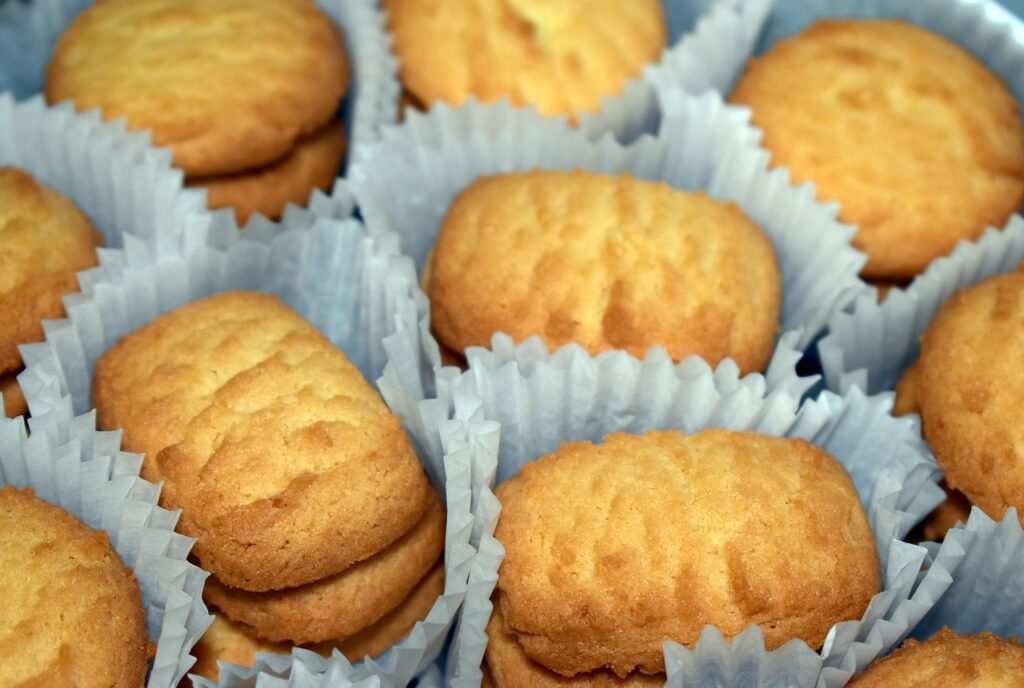
Retaining shape and structure during baking and keeping a soft and tender consistency is the trick to the structural requirements for a cutout cookie yielding a different result to other butter cookie varieties. The flavor profile is sweet and simple with butter and vanilla extract as the most notable. This light and clean base is designed to pair well with the rich and often highly flavored decorative frostings and royal icing.
The Master Recipe (Cutouts)
The technical mastery in cutout cookies centers on dough temperature control to retain shape and structure during the baking process.
Ingredients (Approximately 10 – 15 Servings)
- Unsalted Butter: 450- 500 grams or 4 sticks (Should be at room temp for creaming with sugar.)
- Sugar: 300-350 grams
- Eggs: 2 large. (Comes after creaming the butter and sugar.)
- All-Purpose Flour: 650-700 grams (Slowly added and mixed only enough to incorporate to avoid gluten to develop.)
- Flavoring (Extract): 2 tsp. Vanilla Extract (or almond, lemon, etc. based on preference)
- Salt: 1 tsp.
Mixing:
Take unsalted butter and sugar at room temperature and cream them together using a stand mixer. Then, mix in the egg and flavoring. Next, in go the flour and salt. The batter should only be mixed together until just incorporated.
Mandatory Chilling:
The most important step for avoiding spread is extreme chilling. The dough, wrapped up, is to be chill for at least three hours, and ideally a full night. This step firms the structure of the fat, retaining the butter shape.
Rolling and Baking:
The dough is rolled out and shaped. Using parchment paper, the shaped cookies are lined on a baking sheet. The cookies are baked at 375°F (190∘C) for ten to twelve minutes, until the edges are just slightly golden brown.
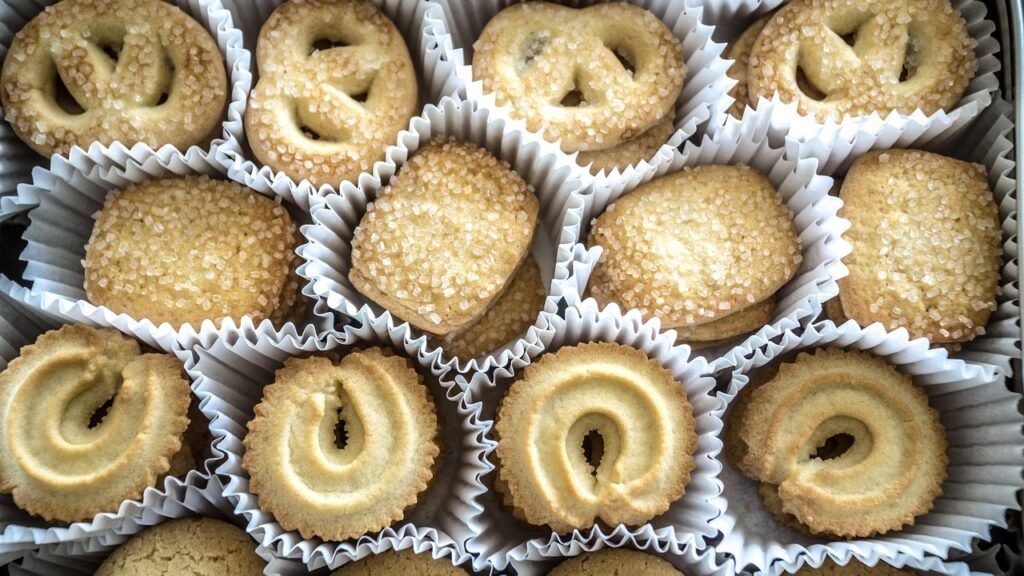
Decorating:
The cookies are to be immediately transferred to a rack where they will finish cooling. Before applying any frosting, it is important to let the cookies finish cooling so that the icing does not slide off the surface.
Comparative Analysis| Technique, Flavor, and Logistics
Recipe Time Comparison| Speed vs. Precision
The five main Christmas butter cookie recipes show a substantial difference in prep logistics due to the different handling procedures required. Russian Tea Cakes and Spritz have the fastest turnaround, and for them, the soft dough can be immediately processed. For example, for Spritz recipes, a fully done prep and bake total time is under 30 minutes, because these recipes, a rarity in cookie baking, skip a chilling phase.
In contrast, for the Linzer and the Cutout cookies, a significant chilling time is required (3+ hours or more, frequently overnight) to firm the dough to a structure that can be rolled and cut repeatedly. This trade-off in preparation time and structure poses a core question for the holiday baker. With Spritz, is the choice volume, and speed, or with the Cutouts and Linzers, structure, precision, and detailed decoration?
Baking temperatures also vary, with delicate cookies, like the Spritz and the Tea Cakes, needing a higher temperature (350∘F–400∘F) to quickly bake for a thin, crisply set cookie, while the Shortbread, being denser, requires a lower temperature (325∘F) and a longer bake time (up to 40 minutes) to avoid burning the surface while thoroughly baking. Standard cooling practice also should be followed, with the cookies needing to be completely and unstacked placed on a cooling rack for 30 minutes at minimum before handling or storing.
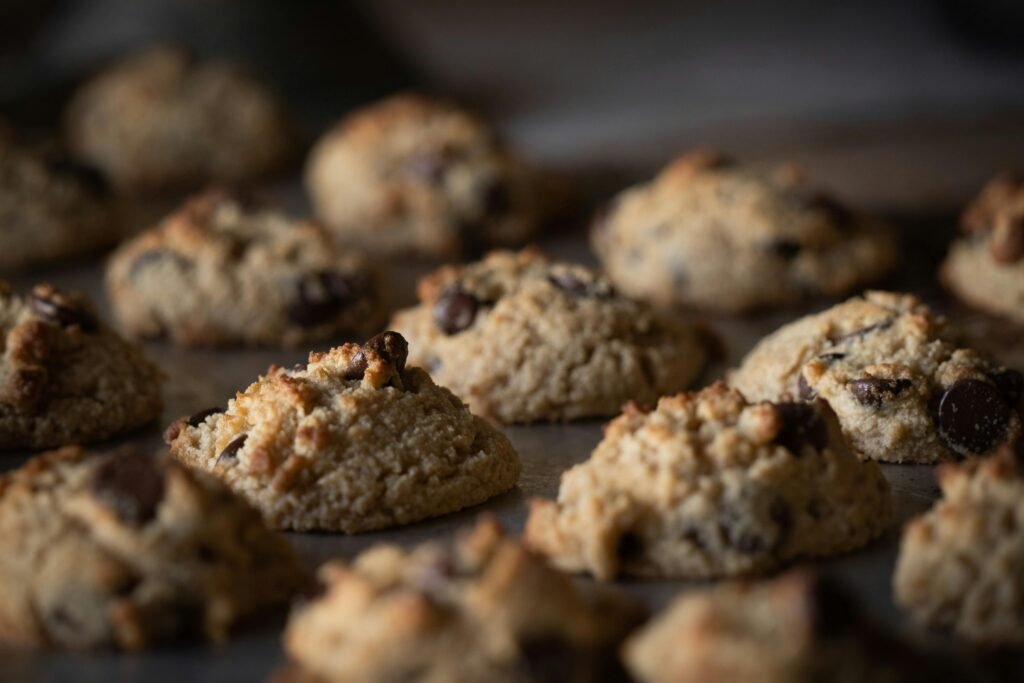
Storage Arrangement during Festivity Period
It is essential to understand that each type of cookie has its own individual and special soft and grainy texture, and therefore its own special soft and grainy texture, and therefore its own individual and special soft and grainy texture. Most homemade cookies, including these Christmas butter cookies, remain fresh for about three days kept at room temperature in an airtight container. Bar cookies kept in their baking pan can have their tops covered with foil or plastic wrap.
If longer preservation is needed, the answer will have to be freezing. Baked Christmas cookies will last up to three months when kept in an airtight container in the freezer. When preparing a set of butter cookies with the intention of mailing gifts as a holiday to friends or family, using quality airtight containers and wraps will be best to eliminate the chance of spoilage.
It is essential to keep cookies of stronger flavors, like Linzer (from the spice as well as jam) and some of the spiced Cutouts, separate from some of the milder, like plain Shortbread or Tea Cakes. This is to keep the strong flavors from dominating the milder ones, and to also keep the cookies with their distinct ingredients inside.
Nutritional Fact ⇆ Check & Comparison
Macron Cals and Nutritional Density of Energy
It is a well-known fact that all classic butter cookies in the world are very high in all macronutrients and also energy dense, because their profile has high zero carb as well as zero fiber.
The main contributor of this fat composition is the unsalted butter, the fundamental aspect of this recipe.
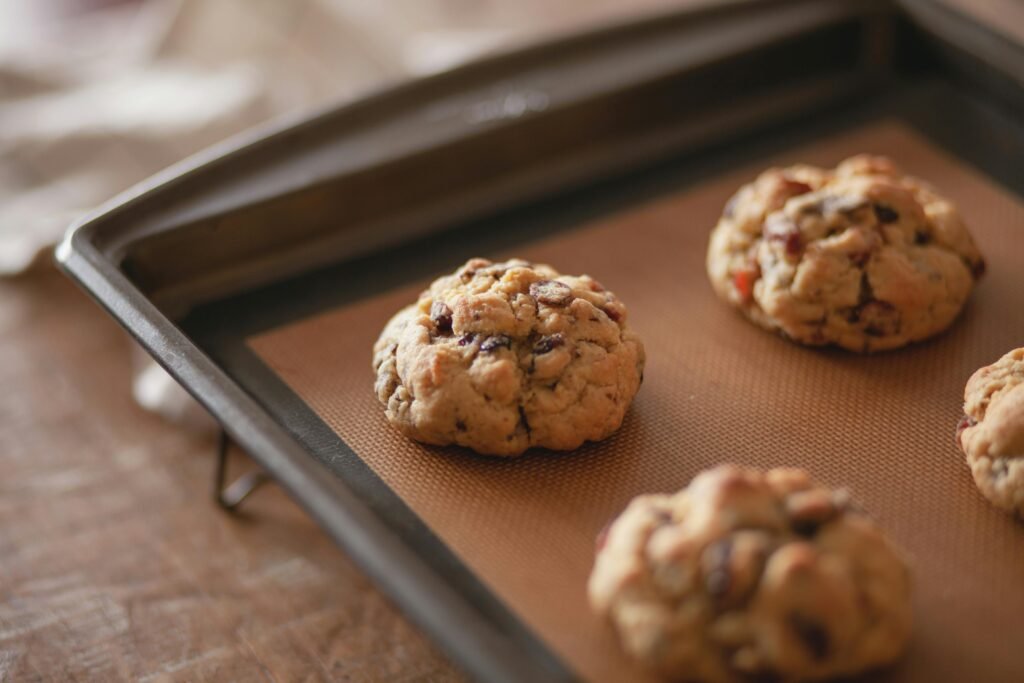
To compare the nutritional details across different cookies, it must be noted that the quantities utilized in serving sizes differ widely across stores (e.g. a Russian Tea Cake serving is 12g while a Linzer Cookie serving is a whopping 113g). When equating to a 100g serving, the nutritional characteristics become more evident. Shortbread, together with Spritzgebäck, is the richest in structure pure-fat cookies (over 514 calories).
Although the Linzer cookie looks like it would be extremely caloric dense at 470 cals per piece (113g), it is actually less calorically dense at 416 cals/100g. This is due to the jam filling, which increases the carbohydrates and sugar substantially (64g carbs total, 31g sugar), but actually lowers the net calories in a piece by displacing some of the biscuit dough fat. Hence changing the nutritional profile from pure fat (butter/nuts) to sugar from the jam.
Russian tea cakes are small (63-75 calories per cookie), but are still high fat dense when standardized to 100g (35g fat). This is because of the high butter and nut content (approx. 33-35g fat).
Expert Recommendations for the Ultimate Cookie Box
Curating the Perfect Holiday Selection
A holiday butter cookie collection is best arranged when different textures and flavors are considered with each selection to ensure every customer has a cookie with their favorite melt in your mouth specialization.
The Five Cookies Include:
- Shortbread: Basic density and pure buttery flavor.
- Spritzgebäck: A precise snap and delicate texture.
- Linzer Cookies: Complexity from nuts and spice with jam.
- Russian Tea Cakes: Soft and crumbly with nuts and powdered sugar.
- Classic Butter Cutouts: A firmer base for decorations.
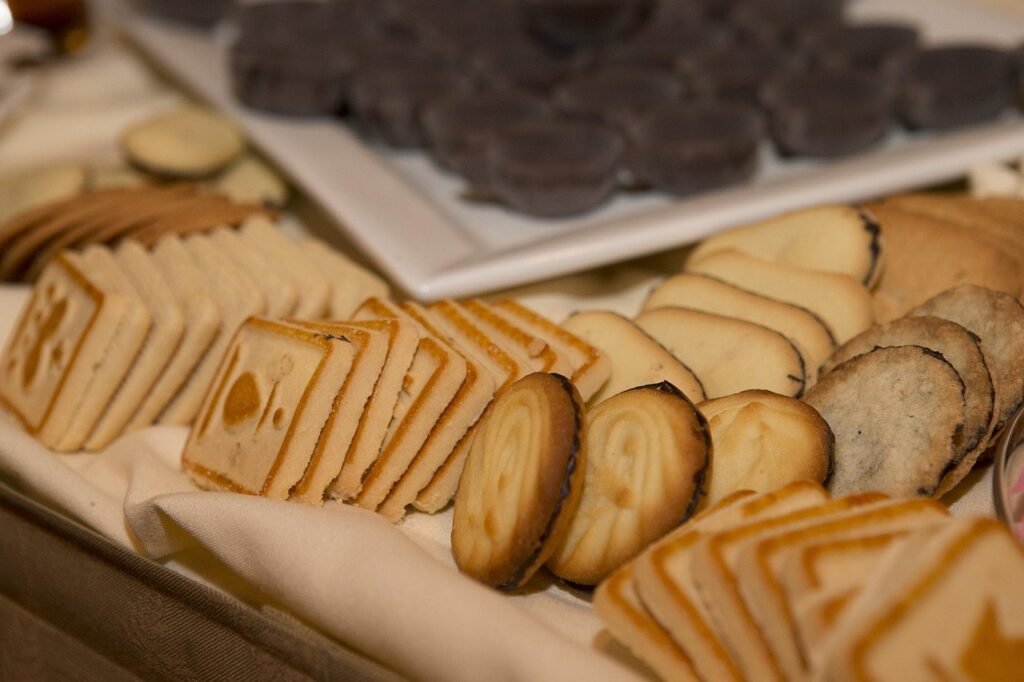
Now, for a holiday platter, there is always the visual aspect to consider. The raspberry jam in the Linzer cookies adds color, which is a nice touch against the white powdered sugar of the Tea Cakes and the uniform golden brown of the Shortbread and Spritz.
Tips on Butter Science & Baking Mastery
The success of these Christmas butter cookies recipe lies in an appreciation for the science of baking, particularly the handling of fat. Mastery of these recipes hinges on the exact measurement and correct temperature of unsalted butter required for every step—be it melted for maximum shortness in shortbread, just soft enough for piping Spritz dough, or kept firm and chilled for stable cut outs. These temperature control an optimal delicate texture with minimal spread of the cookies while in the oven.
Visual cues in the oven tend to be the best indicator of doneness and bakers should be more discerning in this step. Cookies should be removed once they are set and have attained an even, light golden brown color—quite the opposite of dark which detracts from their tenderness. Ideal logistics for temperature maintenance are to properly cool cookies on a wire rack and then store them. These detailed technical principals guarantee that every butter crafted cookie is an exquisite centerpiece for the festive table. All exact measurements and detailed technical instructions are on a recipe card which goes with every formulation.
Christmas Butter Cookies| Frequently Asked Questions
In what ways can we assist with your holiday baking? Below are some of the more common questions that we encounter concerning the history, science, and making of the classic butter cookie.
Why are some cookies called “Short,” and how do I accomplish their tender structure?
Within the realm of baking, the term “short” is generally understood to describe a baked good that, due to the melting characteristics of the high fat content (usually butter), is tender, flaky, and crumbles easily. This is the result of the butter coating the flour granules, which keeps the flour from developing long gluten strands, so long as the flour is not over-mixed.
Many butter cookies take this a step further to achieve the softest texture by adding some combination of cornstarch and rice flour as is the case with shortbread. These ingredients soften the structure of the dough further so that a delicate texture is achievable. Even some recipes that are otherwise standard may generate superior results by using melted butter to coat the flour more thoroughly, limiting gluten development, and maximizing “shortness.”
Why do recipes require using unsalted butter?
Baking is rather less of an art and more of a measured science. Because of that, unsalted butter is the preferred standard in recipes due to more precise control over the overall salt content of the recipe. Salted butter is rather variable in its salt quantities. Too much salt makes baked goods less tender and can cover the delicate buttery flavor that is a staple of good butter cookies. Choosing unsalted butter ensures that every batch is uniform in consistency and flavor.
What is the history behind baking butter cookies during Christmas?
The practice of making butter cookies during the holidays originated during the middle ages in Europe. It became customary to make spiced butter cookies during the Christmas season because the aromatic spices and sugar were a luxury. Sugar and spices were reserved and saved for special occasions and the cookies signified the special festive occasion.
The Christmas sugar cookie tradition began in North America in the 1700s when German immigrants settled in Pennsylvania. They brought the tradition of leaving Christmas cookies sitting out for Santa which became popular around the 1930s.
Why do some butter cookie dough require hours of chilling?
Dough that require specific shapes, like Classic Butter Cutouts and Linzer Cookies, require extra chilling to keep the fat structure in order. The butter needs to be chilly for a few hours or overnight, otherwise, the cookies will spread too much when baking and lose their distinct shapes.
Unlike other types of cookie dough, Spritzgebäck dough used for piping is never chilled, since it has to be soft and pliable at room temperature to press through the cookie press.
What is the best way to store baked Christmas butter cookies?
Short term storage of most homemade butter cookies is to place them in an airtight container where they will stay fresh and delicious for about three days. And, when storing them, make sure the cookies, which should be allowed to cool completely, have no condensation trapped in the container, as condensation can ruin cookies’ texture.
Long term storage of baked Christmas cookies at room temperature is also possible. They can be kept for up to three months in an airtight container in the freezer. To store cookies of distinct flavor profiles, such as Linzer which has jam and spices, it is advisable to keep them separately from other mild-flavored cookies such as Shortbread.
What part does the stand mixer play in getting that perfect, buttery texture?
The stand mixer is a key piece of equipment for almost every recipe made with butter, and this includes butter cookies. It is because of the stand mixer that the creaming process can be done perfectly. Using the paddle attachment, the mixer beats room temperature unsalted butter with the sugar.
This movement whips tiny air pockets into the fat matrix. These micro-pockets make it easier for expansion to occur in place. They do this in order to provide a light lift during the baking process, which contributes to the texture of the dish by making it crumbly and delicate. Because of the evenly distributed sugar and buttery flavor, it is important for the micro-pockets to be distributed throughout the dough.
Why does shortbread require a longer, lower-temperature bake time than other butter cookies?
The shortbread, which is a kind of traditional Scottish butter cookie, is significantly denser in addition to being thicker, than other types like spritz.
To prevent burning the surface of the Shortbread while still allowing the thick dough to properly cook throughout, the recipe calls for a longer bake time of around 35 to 40 minutes, at a lower oven temperature of 325 ̊F (or 165 ̊C). This method of baking guarantees that the biscuit acquires a light, uniform, golden brown coloring alongside the deeply rich buttery flavor, and most importantly the famous melt-in-your-mouth texture, without burning. Once baking is completed, the biscuits must be transferred to a rack to cool.
Which butter cookie type has the highest sugar content due to its filling, and how does this affect its nutrition?
Unlike the other four of the pure butter varieties, the Linzer Cookie (Linecké cukroví) is often singularly nutritionally because of its jam filling, most customarily redcurrant or raspberry. Even though all butter cookies are rich in calories, the jam filling makes it even more so, due to a drastic overall increase in sugar and carbohydrate content, making the sugar and carbohydrate levels the most significant caloric component in the overall united holiday cookie.
In comparison, pure-fat cookies like Shortbread and Spritz are less calorically dense because they rely mainly on the butter and flour/sugar content for their calories, causing a greater fat density when weight is standardized.
For the Linzer recipe, the jam adds a source of tartness, which is necessary to balance the the rich, buttery, nutty dough.
What do most classic butter cookie recipes, including this one, also have, and why is it included?
Most butter cookies recipes, including this one, feature vanilla extract. From Spritz to Russian Tea Cakes to Cutouts, it is used to round out the overall taste of the cookies. The goal is to amplify the buttery flavor that will come from the unsalted butter, but vanilla serves as a powerful aroma. It balances the sugar and fat to ensure the cookies do not taste dull and adds a sweet, complex flavor that is characteristic to cookies made during the holidays. To achieve a deeper and more festive flavor, some recipes, such as Spritz, add almond extract.
What is the primary difference in flavor profile between Linzer Cookies and a classic Shortbread or Spritz cookie?
Unlike the uniform, buttery flavor of Shortbread and Spritz, Linzer Cookies possess a rich and intricate flavor profile. The Linzer cookies rise above the competition as a result of the addition of ground nuts (most commonly almonds or hazelnuts), the warm spice of cinnamon, and the tart raspberry or redcurrant jam filling.
This unique construction employs a necessary counterpoint, as the tartness of the fruit filling mitigates the richness of the nut butter dough and effectively balances the sweet profile. The result is a unique flavor complexity that is suitable for the holidays. This is unlike Shortbread, which achieves its flavor primarily from the unsalted butter and, the primary profile, from a vanilla extract.
Why is the bake temperature for dense Shortbread cookies typically lower and longer than for thin Cutout cookies?
Each recipe contains a baking time and temperature that correspond to the individual dough’s density and thickness. Since Shortbread contains a thicker and denser dough, its baking times and temperature differ from that of other butter cookies.
To allow the biscuit’s thick centerpiece to bake evenly without the edges burning or the texture of the biscuit being compromised, oven temperatures must be kept relatively low (around (325°F (165°C)). The length of baking must be longer as well, usually about 35 to 40 minutes). The biscuit is able to develop a deep buttery flavor while baking and gets a consistent, light golden brown.
In contrast, Thin Cutout cookies are able to bake for a much shorter time (10-12 minutes), yet at a much higher temperature (375°F or 190°C) to be able to quickly bake the cookie without being able to spread the edges.
Besides the stand mixer, what are the essential tools needed for making the five different Christmas butter cookies?
Specialized equipment besides the stand mixer is needed for the different recipes of Christmas Butter Cookies for shaping purposes.
Cookie Press: Soft, unshelled dough must be used for the Cookie Press, as it needs to be used to create the detailed designs for Spritzgebäck without being too hard to push through the plated designs.
Cookie Cutters: Used to create the precise shapes needed for Classic Butter Cutouts and Linzer Cookies (also requiring a small cutter to create the hole for the center).
Parchment Paper: Lined baking sheets are easy to release and create an even texture, especially for Shortbread and Cutouts.
Wire Rack: After the cookies are baked, they need to be moved to the cooling rack where they can cool completely. It is important that cookies are moved to the rack because they can steam and get soggy if they are left in the pan. Transferring the cookies to the rack is important because it allows the cookies to cool completely and to achieve the appropriate levels of crisp and tenderness.
When did the tradition of decorating cutout cookies with frosting begin?
The tradition of decorating Christmas cookies with frosting/icing is very old and began in the 1600s in Europe. During this time period, bakers would use a technique where they would top their cakes and cookies with a mixture of sugar and egg whites. When this mixture dried, it resembled ice, and thus the term icing. This technique has been built upon and has led to the cookies we enjoy today, where cutout butter cookies are used as the foundation for intricate designs made from modern royal icing or buttercream, making them a staple of the holiday season.



Read the book that has captured hearts worldwide. The Nightingale PDF is available now. It is a story of survival, resistance, and the enduring power of the human spirit to overcome even the greatest challenges. https://thenightingalepdf.top/ when does the nightingale movie come out