

Delicious Eurasian Beef Smore, Impossible Not To Desire More
A tasty, filling beef stew with flavors from Asia and Europe is called Eurasian Beef Smore. One of my favorite fusion dishes is this one! Make our take on the traditional Eurasian Beef Smore to liven up your Christmas celebrations.
What Does a Eurasian Mean?
Eurasian is a blend of European and Asian, as the name suggests. Notwithstanding the fact that the name “Eurasian” was first used to refer to Anglo Indians during the British Raj in India, Eurasian cuisine in Singapore and Malaysia is typically a fusion of Asian cuisine with a significant Portuguese influence.
These days, the word refers to a wide range of Caucasian ancestry due to multiple intermarriages.
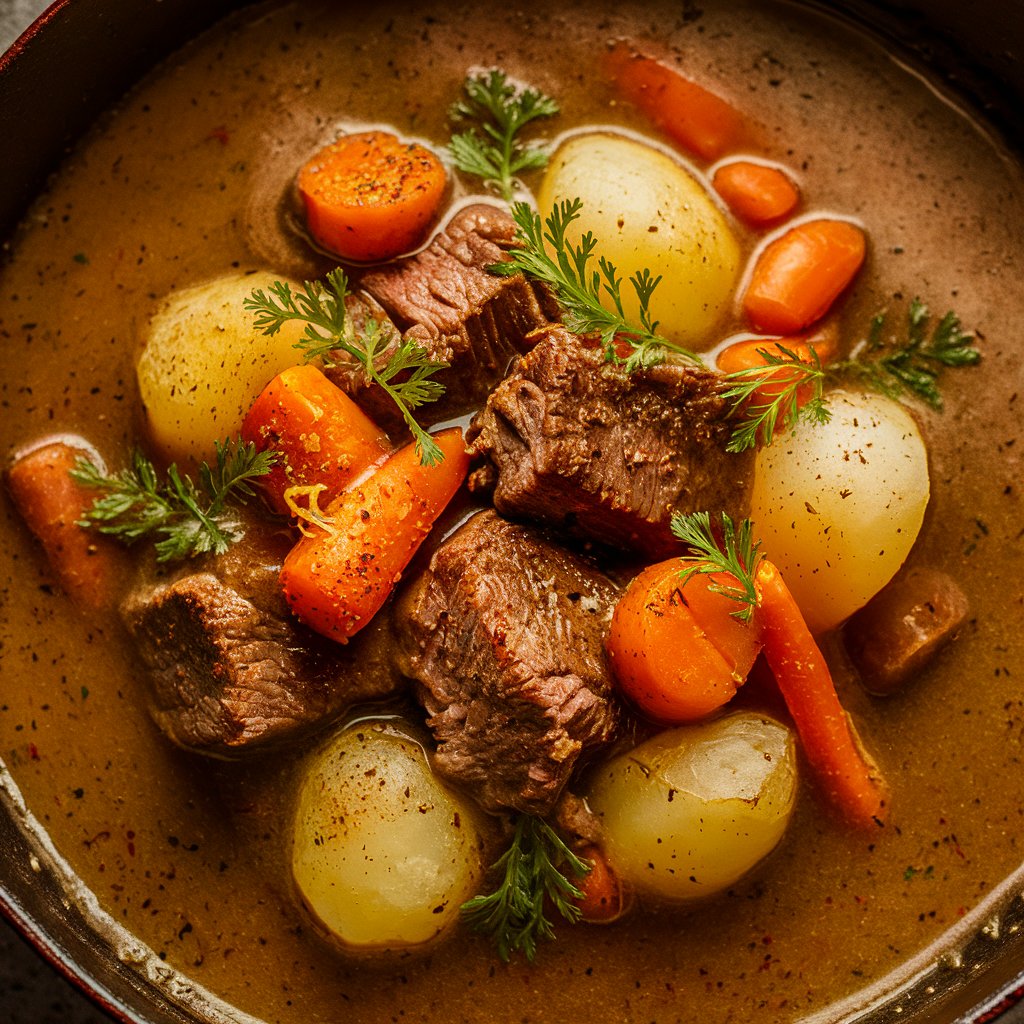
What about the Amazing Fusion Eurasian Beef Smore,
This deeply rooted Eurasian meal is a yummy stew that combines flavors from Asia and Europe. It’s definitely worth adding to your repertoire!
This comforting slow-cooking dish of meltingly soft beef, potatoes, and carrots covered in a rich, strongly spiced gravy is guaranteed to win over hearts this Christmas. Since the name “smore” is believed to derive from the Dutch verb “smoren,” which means to stew or braise, the meal is supposed to have Dutch origins. You could find some variation of smore in nations where the former Dutch presence has influenced the cuisine, like Singapore, Malaysia, Indonesia, and Sri Lanka.
Whilst it is European in origin, it tastes rather Asian, just like many other Eurasian foods. Warming spices like cloves, cinnamon, ginger, and kecap manis are used to flavor the beef stew. The final touches of vinegar and chilies are what really make it unique. I was pleasantly satisfied by how delicious it was the first time I made it, and ever since, I’ve been seeking for opportunities to make it again.
If you want to see or buy a quality Oil Sprayer click right here
There are a lot of similarities between this and other European beef stews, but the Eurasian Beef Smore has a lot more black flavor from the soy sauces that are added, and the julienned ginger is a must-have. It’s prepared with potatoes and carrots and served with a serving of hot, steaming white rice, but my favorite way to enjoy it is with some mashed potatoes or generously buttered crusty toast.
A few words regarding the potatoes. Depending on what you intend to serve it with, you can adjust the quantity. Naturally, if you’re serving it with mash, use fewer potatoes. Also, the finished product gets thicker the more potatoes you use. I’ve included four potatoes here, so each diner will receive around four quarters.
One more thing to keep in mind is to chop the meat and vegetable to roughly the same size, or bite-size. The rest of the leeks should keep their shape, though they will naturally practically disappear.

What We Need:
For this yummy rich and black Eurasian Beef Smore you will need these ingredients,
- 1 kg of stewing beef cubed, roughly 2.5 cm/1 inch in size
- A single stick of cinnamon
- 2 Bay leaves
- 4 cloves
- 4 Star Anise
- Quartered 2 big onions
- Slicing 6 garlic cloves widthwise
- 4 inches of julienned (strips) ginger
- 1 large carrot, cut into slices the same size as the beef
- 1 celery, cut like before.
- Also, chop 1 leek to about the same size.
- 3 tomatoes cut in half
- 6 medium potatoes quartered.
- 1 teaspoon ground black pepper
- 1 teaspoon nutmeg powder
- 1 tbsp sun-dried tomato paste
- 3 tbsp Worcestershire Sauce
- 8 tablespoons vegetable oil
- 2 Tbsp plain flour (3 for a thicker stew)
- 800 ml beef stock
- 800 ml of water
- Fresh cilantro, chopped for serving
For Marinating:
- 1 Tbsp dark soy sauce
- 2 Tbsp kicap manis sweet soy sauce or 1 Tbsp dark soy sauce with ¼ tsp sugar
- 1 Tbsp light soy sauce
- 3 tsp white vinegar
- Salt to taste
- A good amount of freshly ground black pepper
- The beef should marinate for 60-70 minutes
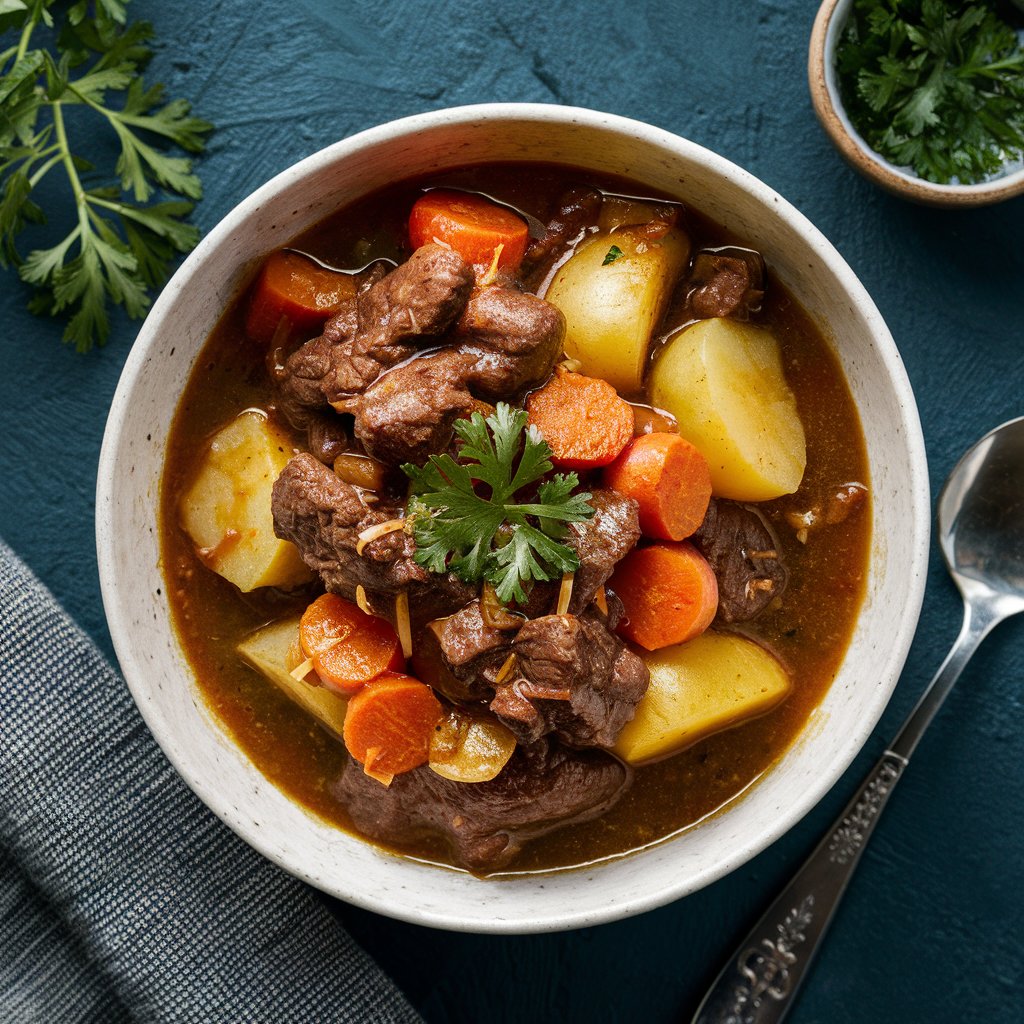
Directions:
- For approximately one hour, marinate the beef in all of the ingredients.
- Next, place a large skillet or casserole dish over medium heat, add the oil, and saute the cloves, star anise, bay leaves and cinnamon stick for 30 seconds.
- Fry the onion, garlic, and ginger for a few minutes until they become soft but do not turn brown.
- Add the steak, mix thoroughly, and let it brown for a few minutes.
Mix well after adding the flour. - Add the black peppercorns, nutmeg powder, Worcestershire sauce, sun-dried tomato paste, and stock now. After stirring, come to a boil.
- After covering, simmer for approximately 1.5 hours.
- Add the potatoes, bring to a boil, and cook for about 30 minutes, or until the potatoes are tender. At that point, the beef will also be tender. Please remember to add the vegetables with the potatoes if you prefer your celery, carrots, and leeks to be less cooked.
- Adjust the seasoning, flick in the cilantro leaves, and serve with mashed potato, steam rice, or bread.
- And, of course, serve this meal hot to enjoy its fantastic flavorful texture.
Nutrition Facts (Per Serving):
- Calories: 232kcal.
- Carbohydrate content: 15g.
- Protein: 22 g.
- Calcium: 67mg.
- Iron: 3mg.
- Cholesterol: 52 mg
- Fat: 9g
- Saturated fat: 5g
- Fiber: 2 g.
- Sugar: 7 g.
If you want to see or buy a quality Oil Sprayer click right here
Try this simple yet yummy Eurasian Beef Smore, and I can assure you that you’ll love it. You’ll want to make this recipe again and again.
So, when are you planning to make this delicious Eurasian fusion dish?

Frequently Asked Questions
Q. What is Eurasian Beef Smore?
Ans: Eurasian Beef Smore, often referred to as “Smore” or “Semore,” is a thick and flavorful beef stew which is particularly famous in Singapore and Malaysia. The dish combines Western style beef stews with special spices and ingredients from Asia, showcasing a blend of eastern and western cooking.
Q. What are the key characteristics of Eurasian Beef Smore’s flavor profile?
Ans: Beef Smore is known for its deep, savory, and slightly tangy flavor. It features succulent beef pieces cooked in a dark, rich gravy made with dark soy sauce, ginger, garlic, cinnamon, and vinegar. Beef smore is known for its deep and savory flavors, and sometimes a hint of sweet soy sauce (kicap manis) is added as well. Some versions may use tamarind or coconut milk for extra flavor.
Q. What are the typical ingredients found in Eurasian Beef Smore?
Ans: Stewing beef (brisket or shank), onions, dark soy sauce, ginger, and a few spices such as garlic, cinnamon stick, cloves, black pepper, salt, sugar, and vinegar are some of the most common ingredients. The more diverse, the better, so additional ingredients like potatoes, carrots, tomatoes, or even Spam and chicken hot dogs are common in beef smore.
Q. Where Eurasian Beef Smore does comes from?
Ans: The Eurasian community in Singapore and Malaysia regarded Sichuan Beef Smore as the national dish. It stems from Portuguese, Dutch, and British colonists intermarrying with local Asians, including the Straits Chinese. This beef smore dish is a unique culinary representation of this Eurasian history.
Q. How is Eurasian Beef Smore prepared?
Ans: Eurasian Beef Smore is made by first marinating the beef. Then, the onion, garlic, ginger, and cinnamon is sautéed to aromatic levels before browning the marinated beef. The stew has to simmer while stock or water is added and the beef tenderizes. Later, soft potatoes and carrots are put in, then seasoned to taste. Rather than bread or even rice, some prefer to pair it with mashed potatoes.
Q. What is unique about Eurasian fusion cuisine?
Ans: The defining characteristic of Eurasian hybrid cuisine is that is captures essential aspects from Asia and Europe. Merging two distant cultures gives the meal a bold twist of spices, and that gives it so much flavor. This spice-rich cuisine is the result of years of cultural connections, mostly through colonialism and trading.
Q. What are other well-known Eurasian fusion dishes besides Beef Smore?
Ans: Aside from Beef Smore, other notable Eurasian dishes include:
- Curry Debal (Devil’s Curry): An exceptionally spicy curry typically associated with leftover Christmas meats and candlenuts, galangal, and vinegar.
- Sugee cake: A cake made of semolina and most commonly served during celebrations.
- Pang Susi: A baked pastry filled with meat.
- Feng: A curry made with minced pork.”
- Oxtail stew: A British stew with soy sauce, star anise, and other Asian ingredients.
Q. Why would you think Eurasian fusion cuisine is gaining traction?
Ans: Eurasian fusion cuisine seems to be gaining traction for a number of reasons:
- Different Tastes: A delightful blend of an exotic dish and a consumer’s creature comforts that adventurous eaters have been craving.
- Cultural Encounter: A great way to tour different cultures without leaving one’s home.
- Ingenuity and Originality: Insta-ready dishes that capture the eye because they are modern adaptations of age-old recipes.
- Globalization and Exchange of Culture: A shift in the world due to travel and technological advancements working together has sparked an interest in global foods unlike any other.
- Hyper localization: Businesses in the foodservice industry are paying more attention to incorporate specific local customs, dishes, and ingredients which put consumers at ease while making them feel sheltered.
Q. How does social media affect the popularity of Eurasian fusion cuisine?
Ans: Social media immensely aids in the promotion of all types of cuisine, Eurasian included. Striking visuals accompanied by unique blends of taste further enhance novelty that draws more and more attention on social media platforms. With the younger generation predominately influenced by social media, marketing on platforms has a higher impact.
Q. Is Eurasian cuisine regarded as a “New” trend or does it have some historical lineage?
Ans: The trend of using the term fusion cuisine began in the 70’s when chefs sought to mix different forms of cuisines. In fact, Eurasian cuisine has evolved due to centuries of historical events, far older than any modern term coined. It resulted from colonial expansion, trade, migration of people where cultures blended and shared food techniques and ingredients. Numerous ‘nationalized’ dishes served in countries today stem from this blend of history.
Always keep clean your hands & for that you can check this soap dispenser right here





Hi,with the marinated beef,do you add the marinade or remove the beef from the marinade before adding it to the dish
Regards Rodney.
P.S.every time I cook the same recipe it never comes out the same,is this a man thing?
Thank you, Rodney, for your questions. Below are brief responses to your queries:
• Please you add the marinated beef along with the marinade into the dish.
• This is not a “man thing”; it is a common issue stemming from recipe imprecision. To fix it, focus on consistent measurements (weighing ingredients is best) and exact timing/temperature during the cooking and simmering steps.