The 15 Most Famous Christmas Cookies
The phenomenon of holiday cookies transc global geopolitical boundaries. It is one of the few culinary customs of the world that still preserves and highlights the cultural significance of historical artifacts, and the role of cookies in Christmas and holiday celebrations. It is also a fascinating study of the evolution of family practices and the integration of medieval trade routes. Like the Greek Melomakarona cookies that lie on the border of ceremonial ancient funeral bread, Makaria, to the contemporary American practice of leaving cookies for Santa, a manner of Christmas offering to St. Nicholas. This report attempts a thorough, detailed examination of fifteen globally treasured Christmas cookies, their historical and signature textures and flavors, and the role every decoration, cookie, and embellishment contributes to the Christmas spirit.
The Cultural Genesis of the Christmas Cookies
The Evolution from Ancient Ritual to Holiday Indulgence
The Christmas cookie phenomenon developed as a blend of necessity, trade, and spirituality. Throughout history, the expression of spirituality through cookies has evolved from being basic and utilitarian to highly specialized holiday treats. In fact, the earliest forms of cookies, or biscuits, were relatively hard and could last a long time without spoilage and were considered treats.
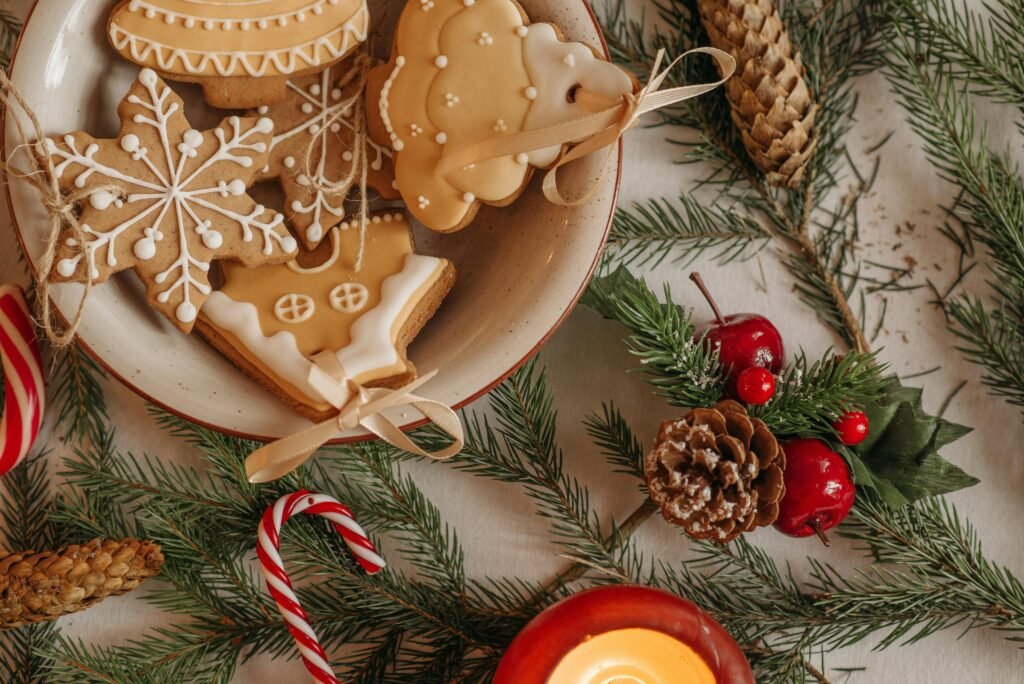
The Christmas cookie, particularly the modern version, owes much to Medieval Europe. German monks were particularly known for incorporating Christmas baking, or Weihnachtsplätzchen, into their spiritual practices. During this time, monks had access to refined sugar, as well as modern imported spices such as cinnamon and cardamom. Monks enhanced simple baked goods with festive spices and transformed them into delectable holiday offerings. The modern version of spice cookies, a Christmas staple, shifted from being a holiday luxury to a holiday dessert as the spices became readily available to the general population.
During this time, German monks shaped Lebkuchen cookies into Christmas and saintly symbols such as stars, angels, and lambs, blending spirituality with flavor. This function confirmed cookies as decorative items imbued with meaning beyond being a simple dessert.
Specifying the Basic Attributes of Christmas Cookies
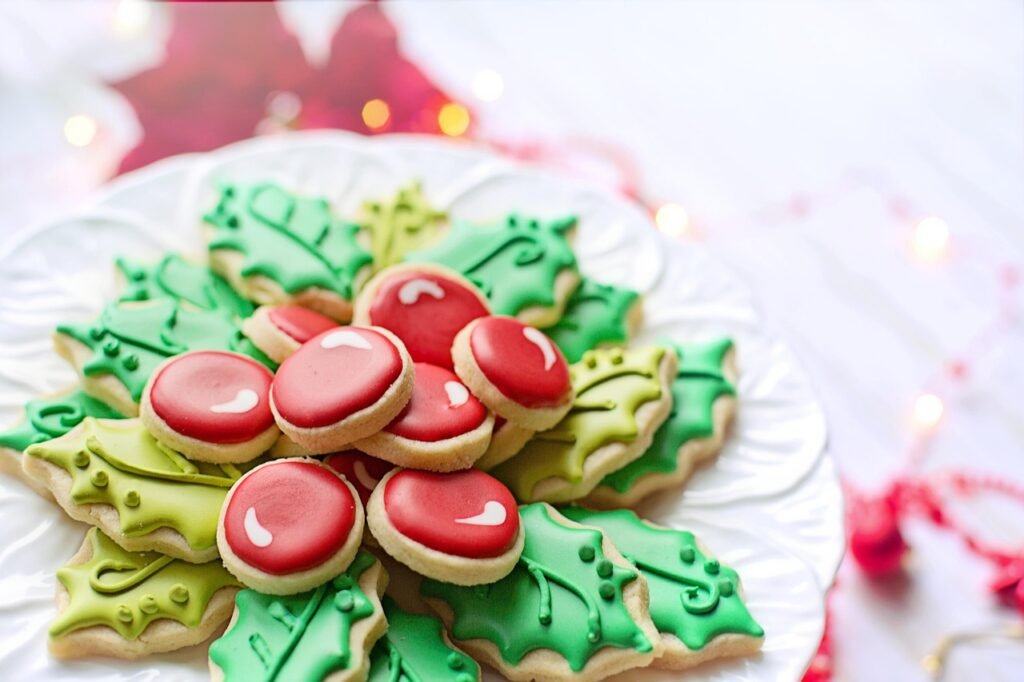
Christmas cookies are distinguished from other types of cookies by their unique recipes and cultural practices surrounding their preparation. Their defining attributes include a formulation high in butter which contributes to a crumbly texture (as in Shortbread and Spritz cookies), the use of warm spices typically associated with winter holidays, and the design which is purely aesthetic in nature. These cookies are usually made in shapes using various techniques like cookie presses or intricate glazes, and elaborate designs are often used to adorn the surfaces.
Even if the soft Spritz and classic Sugar Cookies of today are intended to be quickly enjoyed, their history is rooted in a time when cookies were made to last. This is likely the reason why some dense cookies like Lebkuchen and Pfeffernüsse are made to mature over time. This practice likely stems from their original function as non-perishable Christmas staples.
The different textures we see in contemporary Christmas cookies indicate varying consumer preferences. Some customers seek something light and airy, akin to the Norwegian Krumkaker, while others desire an old medieval-style durable product that serves functional purposes.
The Grand Traditions of Central Europe (Weihnachtsbäckerei)
Weihnachtsbäckerei, or Central European Christmas baking, sets the standards for many of the Christmas cookies we enjoy around the world. The intricacy of the cookies involves complex flavoring, the use of nut-based dough, and elaborate finishing designs.
Lebkuchen (The Spiced Heart of German Christmas):
Lebkuchen are the most iconic German Christmas cookies that go back to the history of Nuremberg and Dresden. Although most people define these cookies by the cake-like form and texture, they may also be very dry and soft. They emphasize honey and fragrant warm spices with ground nuts. The regional variations are also very valuable, like the Nürnberger Lebkuchen, which is protected by geographic indication due to its high nut content.
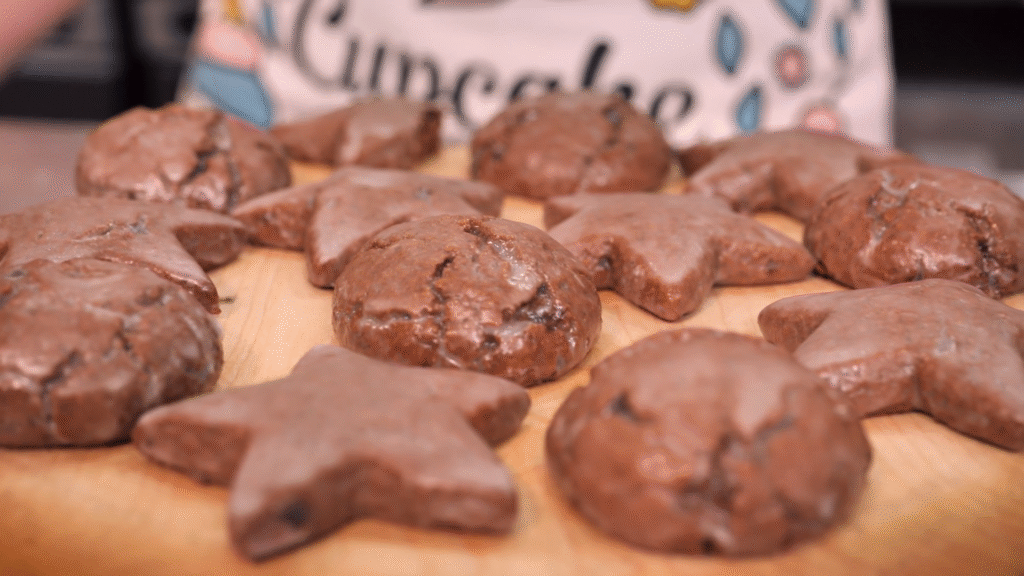
Dresdner Dominosteine is the most specialized Christmas confection. These complex layered cookies are built on a Lebkuchen base, apricot or sour cherry jam, and marzipan, and are finished with a milk or dark chocolate couverture. They are complex regional cakes portioned for a Christmas cookie platter, improving the sophistication and variety of Christmas offerings. To provide contrast, the small round Pfeffernusse, or pepper nuts.
These traditional Christmas cookies, despite the name, are not made with either pepper or nuts. Still, they are made with a host of spices. These cookies, known as Pfeffernüsse, have a history that spans as far back as the middle ages. They are made with holiday spices, illustrating the need for spices in holiday baking. The Pfeffernüsse cookies are dense and chewy, which complements the softer Christmas cookies.
Linzer Cookies and Vanillekipferl (Austrian Elegance):
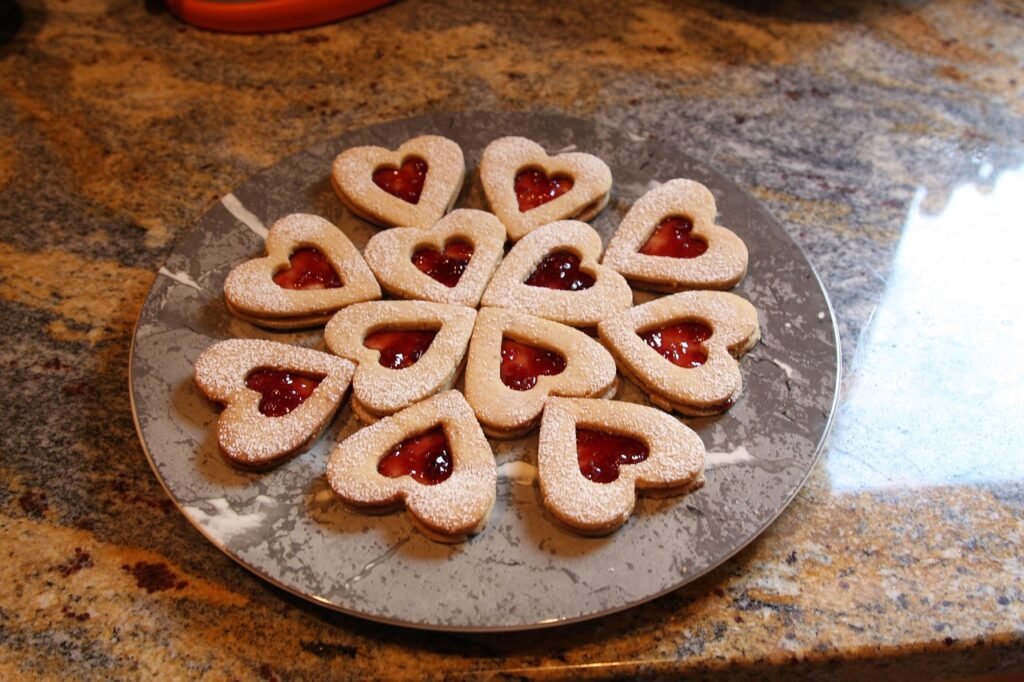
Austria provides Christmas cookies that are embellished with grace and elegance. The Linzer Cookie stems from the larger Linzertorte, which comes from the city of Linz. These delightful sandwich cookies are made with two butter, nut based (almond) biscuits which are spiced with warm spices and lemon zest. For the signature touch, the upper cookie is cut in shape of a star, heart, or snowflake and the dichromatic biscuit showcases the jam filling and preserves. These cookies are made with almond biscuits and the jam filling provides a delightful balance.
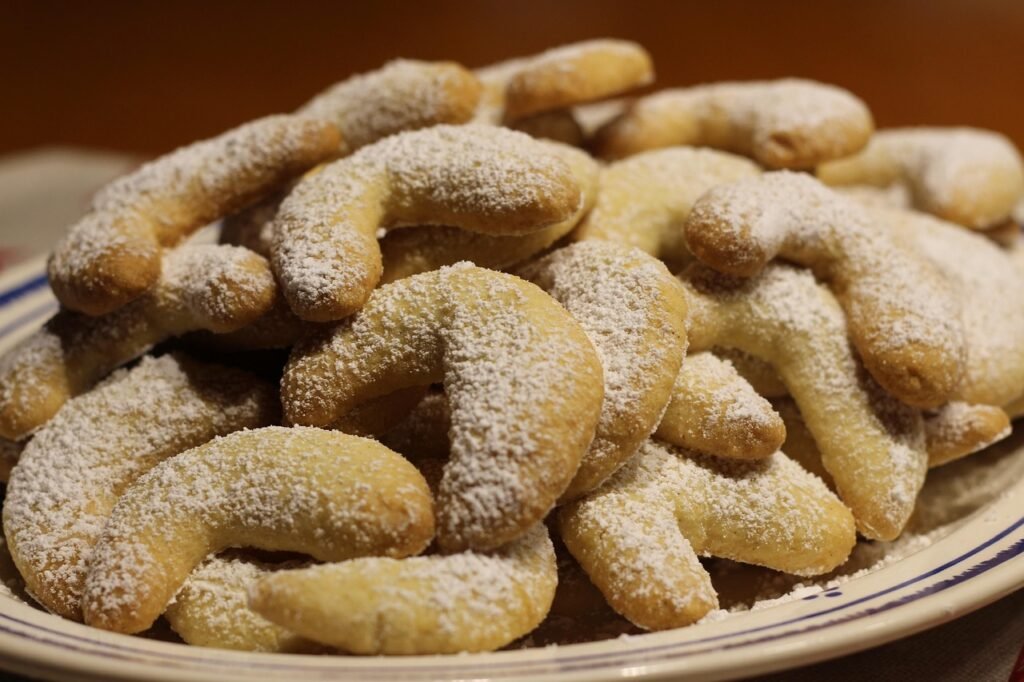
Vanillekipferl (Vanilla Crescents) are cut, crescent shapes biscuits that are known for their melt in the mouth texture. They are made using ground hazelnuts, richly flavored with Madagascar vanilla, and heavily dusted with confectionery sugar.
Starting in Vienna, the distinct crescent form is sometimes viewed as a subtle nod to the Ottoman Empire’s Half Moon insignia. The shape’s longevity, preserved as one of the most popular Christmas cookies, recalls how quietly food may capture and sustain cultural memory along with aesthetic consideration.
Springerle and Spekulatius:
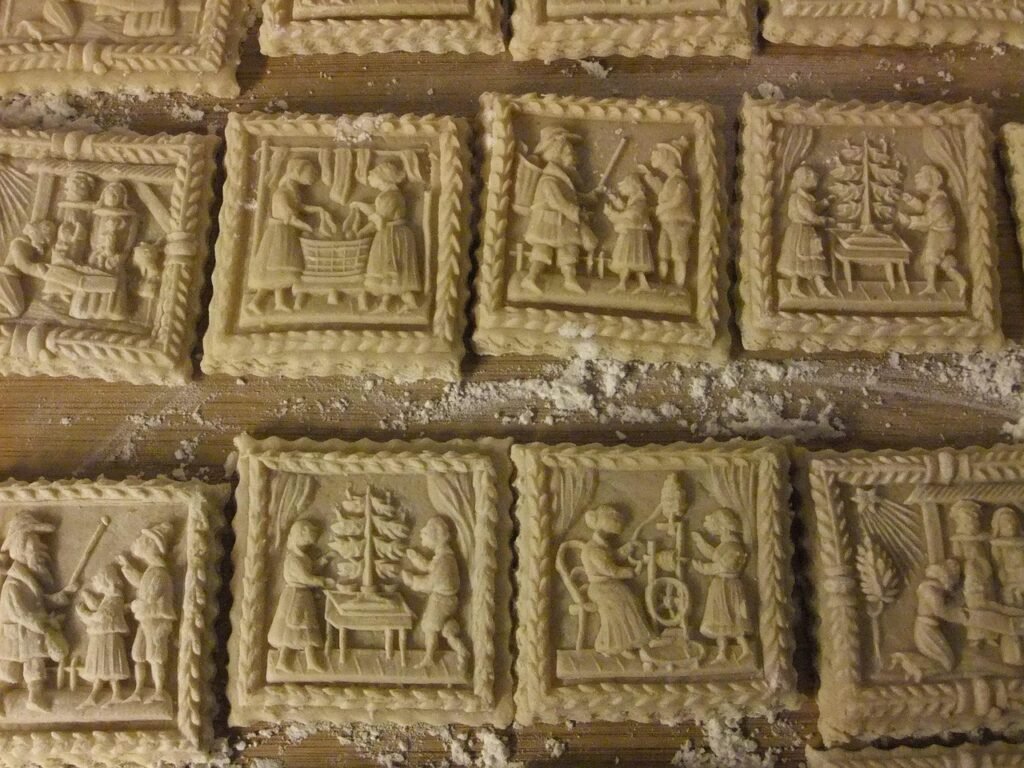
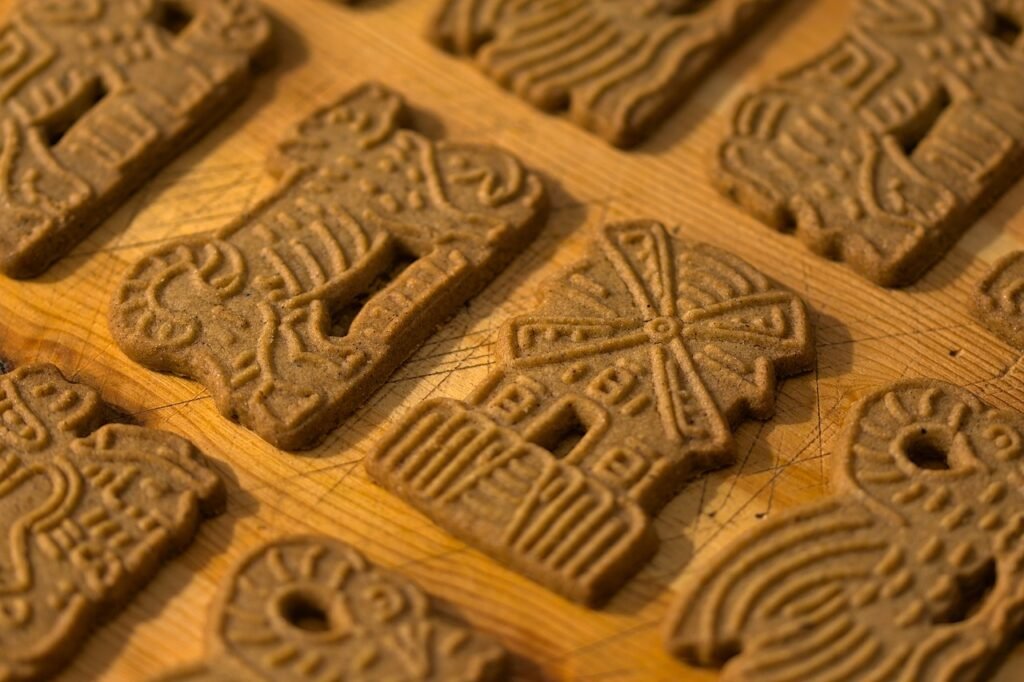
Additional Central European Christmas cookies history includes Springerle, having a centuries-long tradition in Southern Germany and Austria. These are thick, anise-flavored cookies made from a sculpted, molded dough which is pressed into intricate, decorative, and ultimately raised designs. Spekulatius, or windmill cookies, are thin, crunchy, and spiced shortcrust cookies which are often baked with traditional imagery, sometimes referred to as windmill cookies.
Mediterranean Delicacies (Italian and Hellenic Festive Cookies)
Christmas cookie traditions of the Mediterranean are characterized by antiquity, an abundant reliance on high quality nuts, especially almonds, and often include honey or fruit preserves and fillings.
Pizzelles (The World’s Oldest Christmas Cookies):
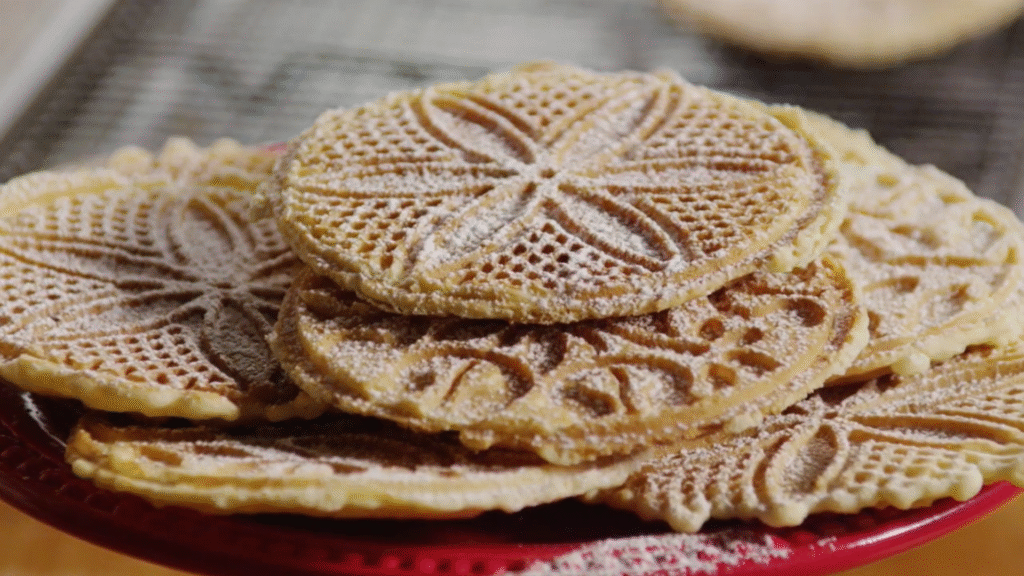
Pizzelles are part of the Italian and culinary history. They are the oldest known cookies and date back to the 8th century. They are from the Italian provinces of Abruzzo, Lazio, and Molise and have regionally distinct names including Ferratelle, nevole, catarrette, and cancelle. Pizzelles are thin, crisp, and waffle-like cookies made using a special iron, and are typically flavored with anise, anisette, vanilla, or lemon zest. They are flavored to achieve a delicate, complex, and subtle taste.
Melomakarona (The Greek Honeyed Legacy):
Melomakarona (Greek honey cookies) are particularly important to Greek Christmas celebrations and are of particular spiritual significance. The name comes from Makaria, the ancient ceremonial bread offered during memorial and funeral ceremonies to the deceased. In the Byzantine era, honey (meli) was added to the bread, transforming the recipe and associating the cookies with the sweetness of life and honeyed prosperity. Melomakarona, Greek honey cookies are popular, soft, and moist Christmas cookies with an intense saturation of rich honey syrup, baked and served during the festive season.
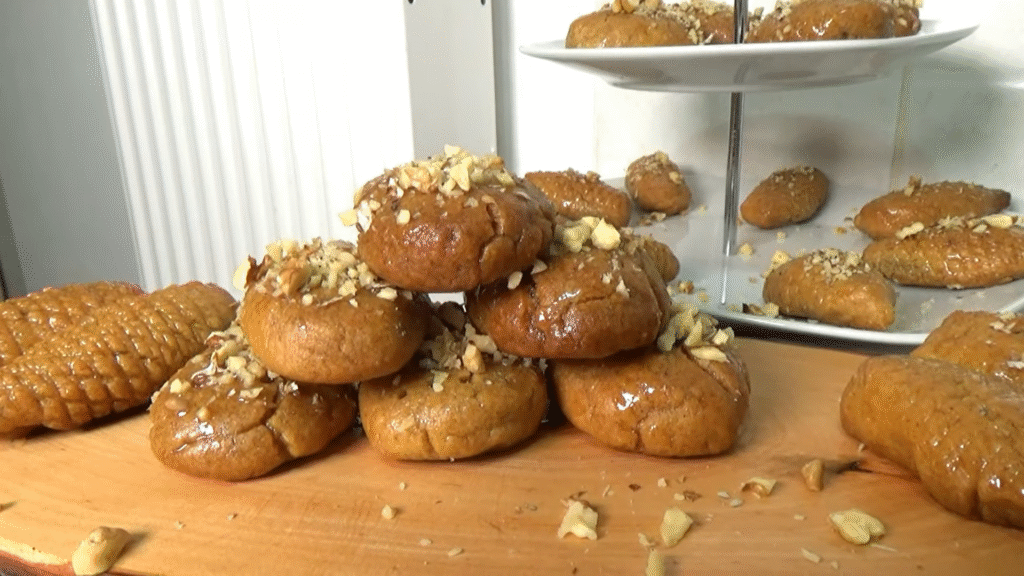
The typical garnishing includes sweet spices like cinnamon, cloves, and crushed walnuts, evoking a festive cheer and warmth. The reverse “tradition” of offering a special treat at Christmas time, a change from the somber and chilling offering of a Christmas funeral sweet, the Christmas funeral sweet. The deep power of food rituals is establishing the bridge from the commemorating warmth of the afterlife to the hospitality of Christmas.
Italian Almond and Meringue Cookies
The versatility and the varying textures and uses of the Christmas Italian cookies and their extensive use of almonds in Italian regional cookery is remarkable. “Christmas culinary opulence” is primarily celebrated and marked with almonds and hazelnuts. As a festive ingredient, nuts (especially almonds and hazelnuts) were of such historical value, added to the strongest and most luxurious Italian Christmas cookies (like Linzer, Ricciarelli and Brutti) as proof of the Christmas culinary opulence.
Brutti ma Buoni:
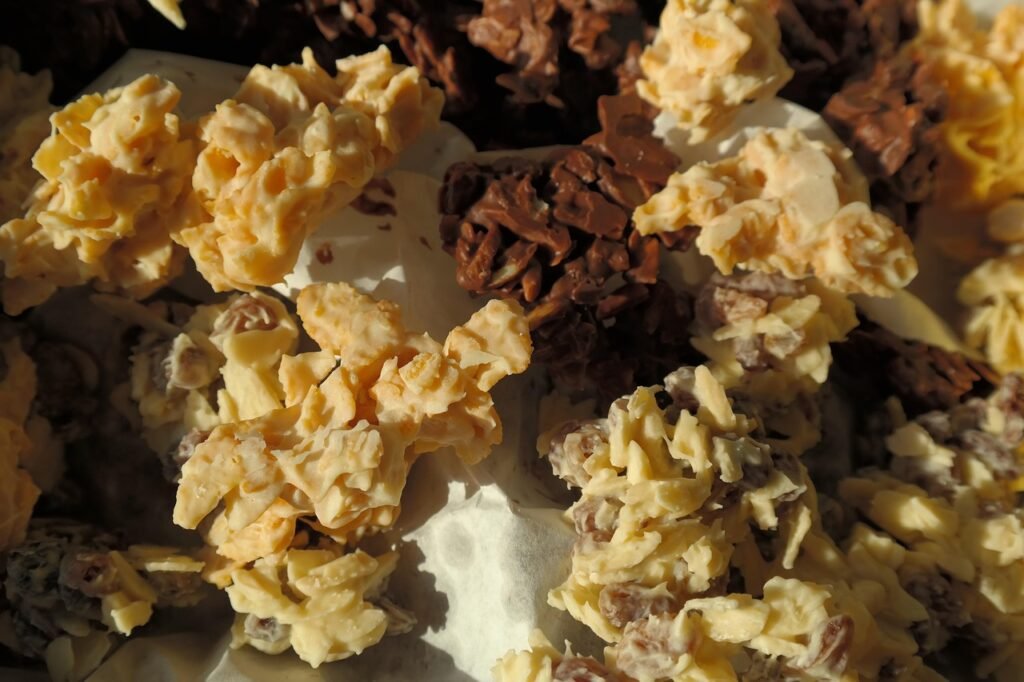
Famous for the “Ugly but Good” meringue Christmas cookies. The harvested, roasted and blended meringue with nuts (hazelnut and almond) is a perfect example of Italian food fusion with a remarkable and refined culinary originality.
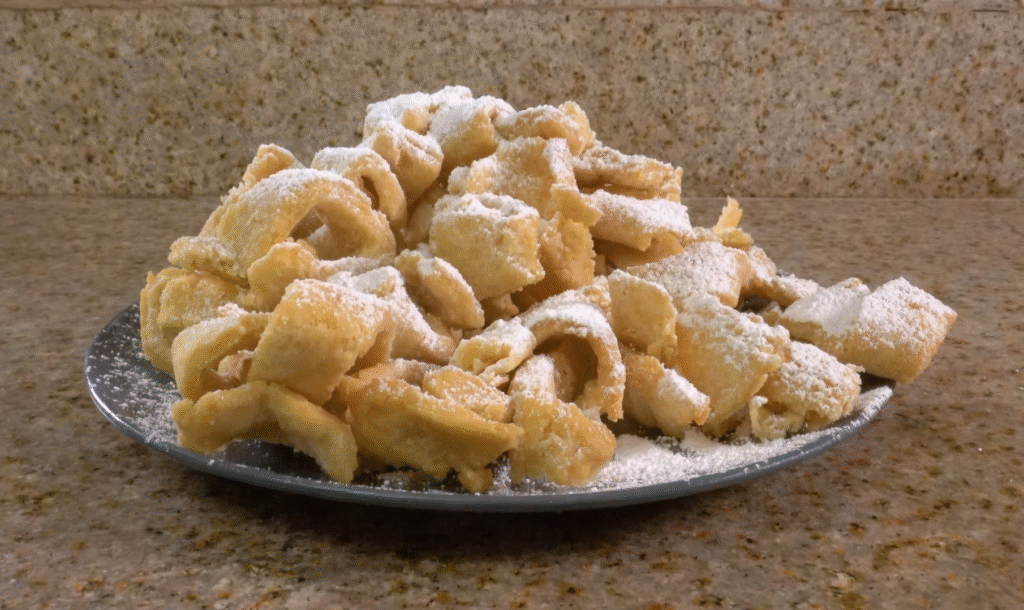
Frappe or Cioffe:
The fried and sweetened dough is prepared in the traditional Italian ‘bow tie’ style and finished with powdered sugar. The dough and sweetened cuts are so lightweight that they are considered “angel wings” or “angel wings” most notably finished with a dusting of powdered sugar.
Broader Global Cookies (Date and Saffron)
The global reach of Christmas traditions also includes cookies with Middle Eastern and Eastern Asian influences. Kleicha (Iraqi date cookies) and Maamoul (from the Levant) date-filled cookies are winter festive assortment staples, showcasing the culinary tradition of using dates and nuts. Further east, Shirini Kishmishi (Persian Saffron Raisin Cookies) offers a prized golden hue and delicately perfumed cookies, while Naan Berenji (Persian Rice Flour Cookies) are light, eggless Christmas cookies known for their delicate texture because of the rice flour base, which aligns with Christmas traditions.
Northern European & Anglo-Saxon Buttery Classics
These traditions place emphasis on the use of copious amounts of butter, special baking implements, and rich, crumbly textures that are exceedingly layered. In addition, these Christmas cookies also have particular ceremonial functions that are distinctly and separately observed.
Scottish Shortbread (The Luxury of Butter):
Scottish shortbread perfectly embodies the evolution of a humble food to a luxurious Christmas treat. Shortbread originated in the 12th century as a dried, baked leftover bread dough. The real refinement happened when the leavening agents were replaced with the costly butter, producing a richer, sweeter baked product. Shortbread became a celebratory cookie as the price of butter became unattainable for the average person. The cultural role of shortbread, from an everyday and sustenance, became a festive ritual food to be enjoyed on special occasions.
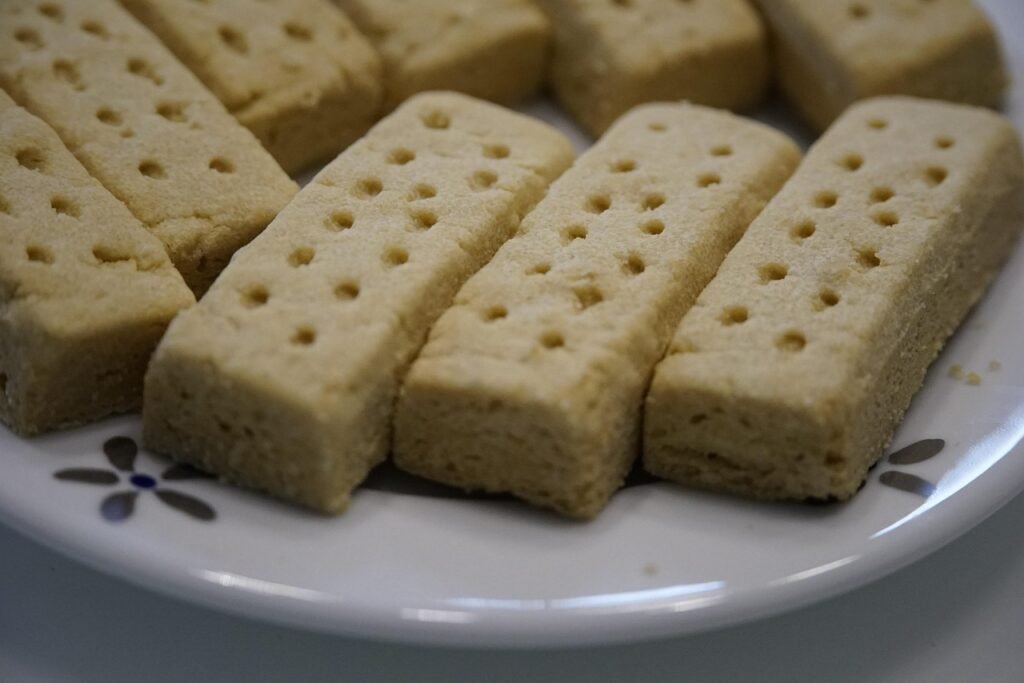
Scottish shortbread possesses an astonishingly high butter to flour ratio. This is what makes it dense, crumbly, short, and buttery. It melts right on the tongue as you eat it. Traditionally, Scottish shortbread is made with wheat or oats, and it is shaped into fingers, rounds, or segments, which are known as Petticoat Tails. Previously, this lavish food was exclusively for the upper-class and eaten during festive holiday seasons, especially Christmas and Hogmanay. In some parts like, Shetland, a decorated shortbread was to be ritually broken over the head of a new bride for good luck.
Nordic Wafers and Pressed Christmas Cookies:
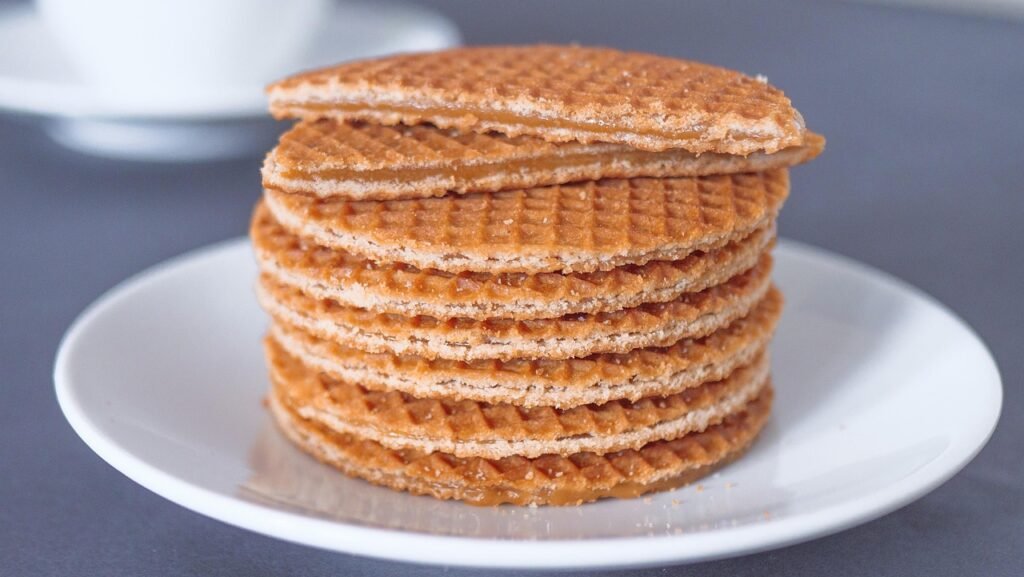
Moving on to the Nordic region, Christmas time means decorated Christmas cookies. In this part of the world, cookies are usually made with special equipment to enhance the intricate designs and for delicate textures. Krumkaker are Christmas cookies from Norway. They are baked using special irons that are sometimes heated over an open fire. These cookies are rolled into cones after baking. Sandbakelse are also from Norway but from the 19th century. These sugar cookies are baked after the dough has been pressed into decorative tins, creating a delicate, cup-like structure. For these Northern European cookies, the exact visual presentation is just as important as the taste. This shows the emphasis on craft and formality in Christmas food traditions.
Kal Kal (Kulkul) (India’s Festive Hand-Rolled Treat):
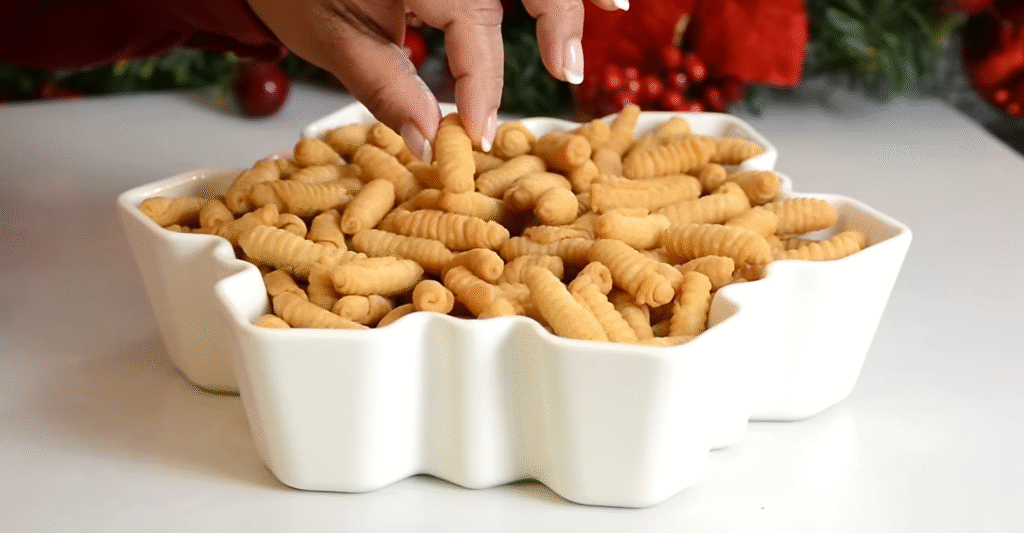
Kal Kal (or Kulkul) is a rolled and deep-fried Christmas cookie specifically for Christians in India. The texture is unique, as they are crispy on the outer layer but are soft and cake-like in the inner part. The deep-fried cookies also have a strong cardamom flavor which is very sweet compared to European spiced cookies.
American Adaptations and Modern Classics
American Christmas cookies are the result of a combination of European techniques, specifically those from Moravian/German and Dutch traditions. These approaches have been adapted for efficiency, accessibility, and the modern family unit engagement.
The Sugar Cookie Family (Versatility and Decoration):
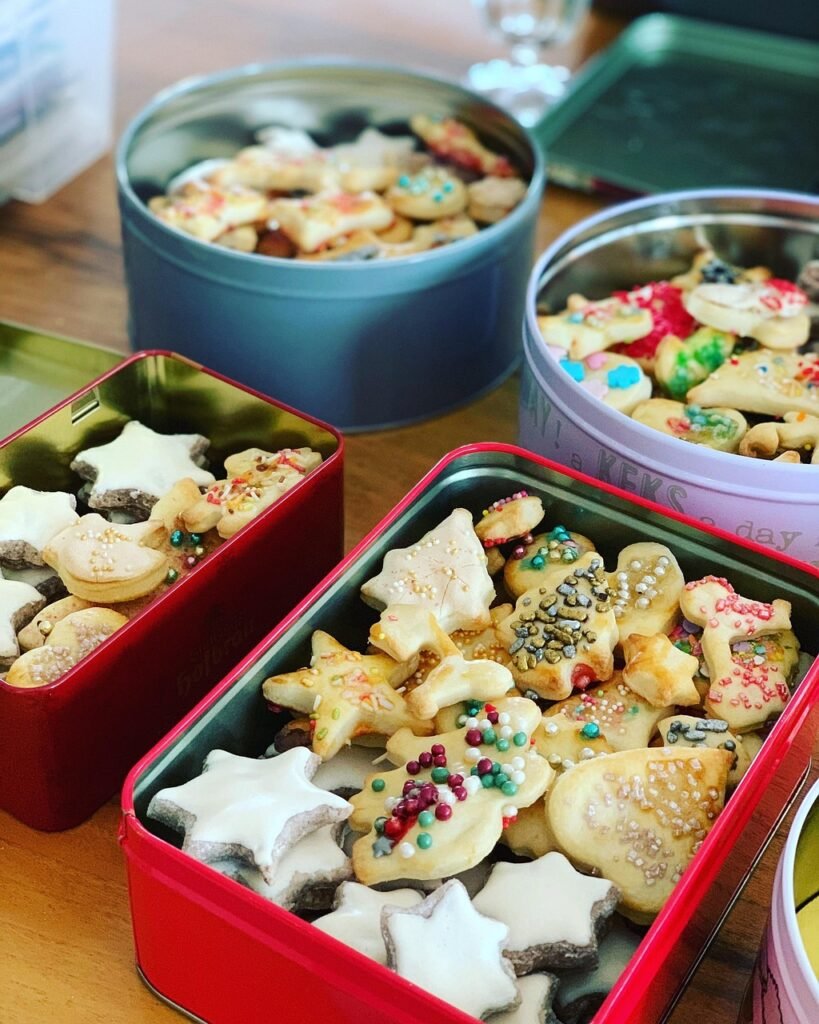
The Sugar Cookie has nailed down the title the quintessential American Christmas cookie. Its modern version is credited to the Moravians while they were settling in Nazareth, Pennsylvania, during the mid-18th century. Because of this, it is also known as the Nazareth Sugar Cookie or the Amish Sugar Cookie. The strength of the Sugar Cookie lies in the simplicity of the buttery base. The base is the perfect canvas for creatively decorations, and thus it is the quintessential “cutout cookie” for festive shapes, elaborate icing, and sprinkles.
Spritz cookies and Snickerdoodles (Texture and Technique):
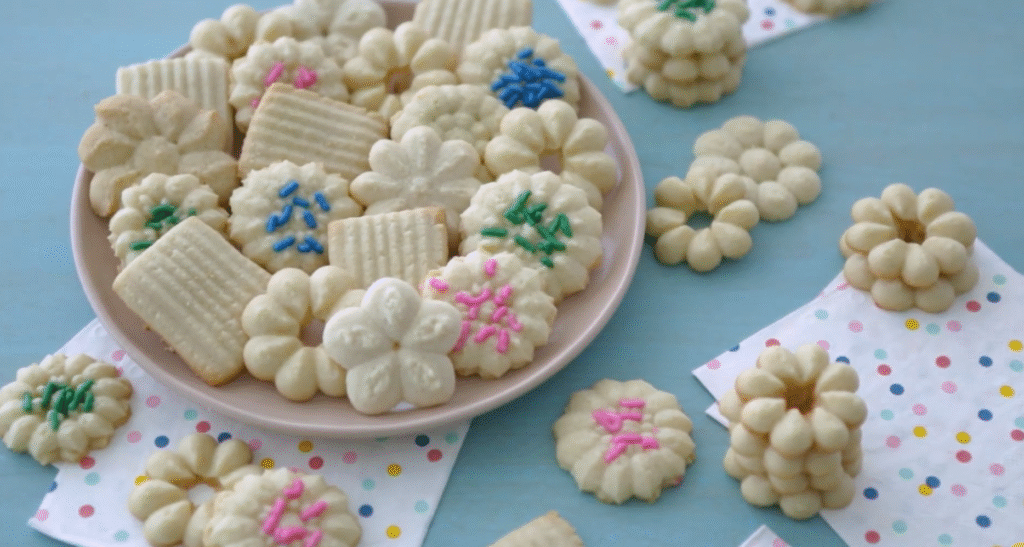
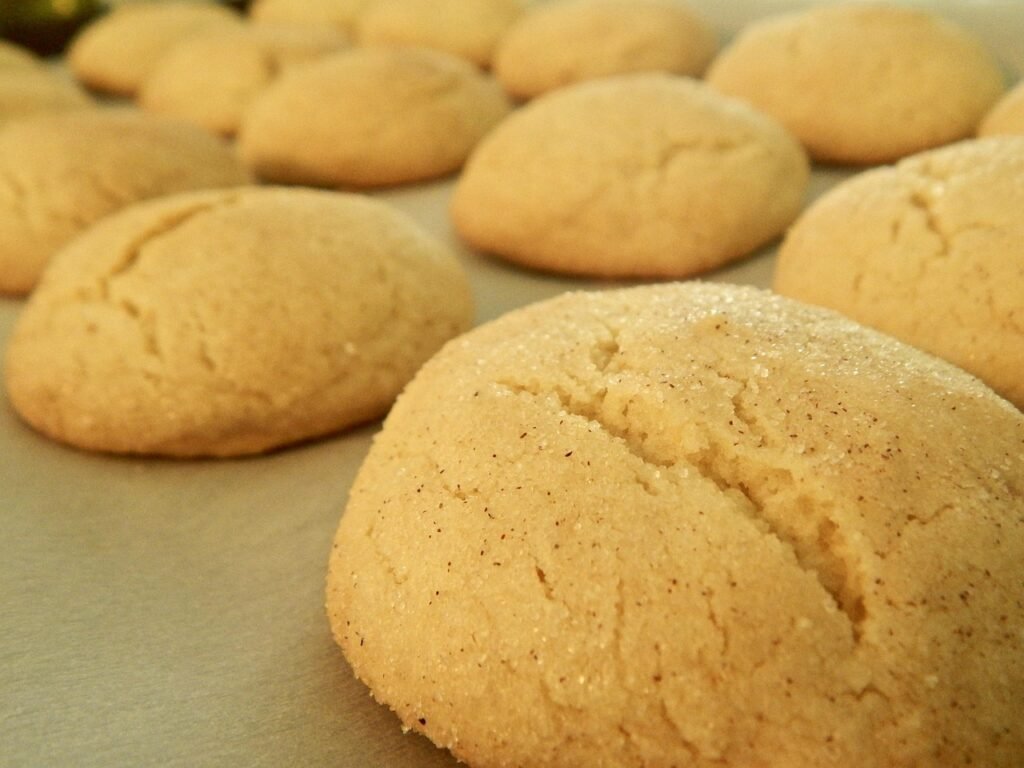
These American classics focus on soft, specific textural outcomes. For spritz cookies, named after the German word spritzen, which means “to squirt,” the buttery batter is pressed through a cookie press and shaped into intricate designs. They tend to create very specific shapes like Christmas trees or snowflakes. The cookies are soft and buttery to the point of having a melt in your mouth texture, and this is the primary characteristic that they share with cutout sugar cookies and shortbread. The use of cookies that are quick and easy to prepare is a strong indication of a tradition focused on high volume baking with family and festive participation. Snickerdoodles are the classic American Christmas cookie that is soft and chewy. They are perfect in texture.The generous layer of cinnamon sugar sprinkled on top prior to baking remains their signature characteristic.
The Thumbprint Cookie Tradition:
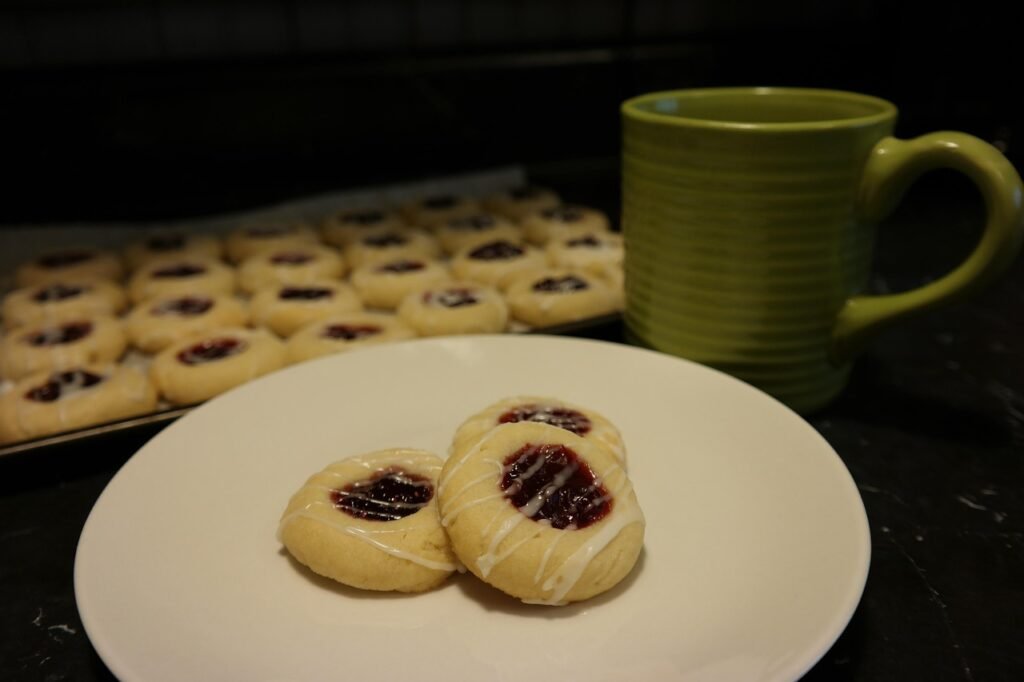
The simplicity and versatility of thumbprint cookies is what makes them delightful. The process of making them truly is in the name—start with a ball of soft dough, flatten it, and use a thumb to make a well in the center. This well is filled with a sweet filling, which can range from Nutella or chocolate, like a Hershey’s Kiss, to various fruit preserves. The Swedish version of this cookie is called Hallongrottor.
Modern Christmas cookie traditions include the ritual of leaving cookies and milk for Santa. This practice can be traced back to St. Nicholas, associated with Christmas, and the older Christian traditions, but it was solidified in the 20th century by milk marketing campaigns which integrated Santa into the marketing. This marketing maneuver illustrates how industrial marketing standardized certain aspects of generosity associated with Christmas.
Synthesis & Global Legacy
The Cultural Functions of Cookies
Christmas cookies serve a unique cultural purpose that goes well beyond the role of the sweet a dessert. The essence of these practices is traced to acts of kindness. Leaving offerings for Santa Claus evolved from ancient midwinter celebrations and the veneration of St. Nicholas. A bishop of the Greek Orthodox Church of the 4th century, St. Nicholas is the patron of both children and bakers and is also known for his acts of generosity. The Christmas season gratitude and kindness lessons are centered on this tradition. In addition, cookies are practical fellowship symbols. They are commonly used to warmly present and exchange gifts. This portable and storable dessert also made the ideal treat during festive season for prolonged celebrations. Cookies, unlike pies and cakes, can be stored for lengthy periods which made them festive season staples.
Synthesis of Flavor and Texture
Christmas cookies are made differently across the globe which means a world of diverse textures and flavors. This report has identified four main textural characteristics:
- The Buttery and Crumbly: Rich cookies such as Scottish Shortbread and Spritz with a high proportion of fat are intended to melt in the mouth.
- The Dense and Chewy: Pfeffernüsse and Italian Ricciarelli or Brutti ma Buoni are the robust Christmas cookies which offer a chewy and satisfying texture, often spiced or nut garnished.
- The Syrup-Soaked: Greek Melomakarona is distinct as it requires soaking in syrup after baking to attain a sweet, dense moistness.
- The Wafer-Thin: Italian Pizzelles and Norwegian Krumkaker are examples of the fragile crisp forms which were designed with specific baking devices to achieve this texture.
Enduring Legacy
The Christmas cookie illustrates how much localized culinary traditions from Norway to India and Greece to Iraq can come together for the holidays. It shows a human need that is sweet, celebratory, and communal. The range is substantial given the differences in techniques and ingredients.
Lastly, the names for these celebratory cookies are highly fluid. The Italian Pizzelle, for example, is also called Ferratelle, nevole, and cancelle in other locations. The modern sugar cookie has also been referred to as the Amish or Nazareth Sugar Cookie. Such fluidity in naming shows that the essence of these Christmas cookies—a certain set of ingredients, texture, and cultural importance—is more prevalent than the names themselves. This makes the custom adoptable and transformable at any cultural or geographical point.
FAQs
Why do you need to chill the cookie dough for cutout cookies?
Chilling the dough contracts the fat (butter), enabling the dough to be rolled out and cut into shapes without sticking excessively. This process allows the cookies to better retain their shapes during baking and reduces spreading.
Why is there an advantage to cookie dough “aging”?
There are a multitude of benefits that come from aging cookie dough. The flavor, texture, and appearance of the final cookie will be improved. Aging allows the flour to fully hydrate, and the ingredients will blend cohesively.
My cutout cookies spread too much. What did I do wrong?
This is usually caused by:
- Butter being too soft or over-whipped: Excess air or melted fat will cause spreading. Only use softened butter.
- Over-mixing the dough: This changes the texture because of the developed gluten. For the best final appearance, mix the ingredients until just combined after adding flour.
- Not chilling the dough long enough.
Should I use cold or room-temperature ingredients?
For the majority of recipes – and particularly those that include the “creaming” method with butter and sugar – it’s necessary to use room-temperature butter and eggs. This ensures that the butter and eggs form a cohesive emulsion. Failing to do this and using cold ingredients will result in a chunky and uneven dough base.
How far in advance can I make Christmas cookies?
This will vary depending on the kind of cookies you plan to make:
- Chocolate Chip Cookies: Prepared dough can be kept in the refrigerator for up to 2-3 days or frozen for 3 months (shortbread and other similar cookies can be frozen for 6 months).
- Baked cookies: Properly stored baked cookies will last 3-7 days at room temperature. Cookies can be baked twice (like biscotti) and those will last even longer.
What is the best way to store baked Christmas cookies?
Allow cookies to cool and store them in an airtight container at room temperature (unless the recipe says you should chill them). To protect decorations, do not stack frosted cookies, or sandwich them with parchment paper.
Can I freeze decorated Christmas cookies?
Yes, most decorated cookies can be frozen. Just remember to seal them in an airtight container or freezer bag. To defrost, leave them out on the counter for a few hours. If you made cookies that came out a little too crunchy, freezing them will help!
Why do we leave cookies and milk for Santa Claus?
This custom reflects the spirit of generosity and gratitude. It stems from older traditions of leaving food and other offerings to wintertime gift givers, such as St. Nicholas, or other charitable folk, as well as spirits of the season.
What are some traditional Christmas cookie types?
Many cultures have traditions that feature spiced cookies. Some of the most popular are:
- Gingerbread cookies
- Classic sugar cutout cookies
- Shortbread/Spritz cookies
- Snickerdoodles
- Snowball cookies (also called Russian Tea Cakes or Mexican Wedding Cookies)
My cookies are coming out too hard or dry. What makes them tough?
This is usually caused by over-baking, or too much flour mixed in, or over-mixing the dough:
- Over-baking: Longer baking times mean more moisture is evaporated and you are left with dry cookies. It’s best to take cookies out when the edges are just set and the centres look soft; they will continue to cook while resting on the hot baking sheet.
- Excessive Flour: Prevent compaction by utilizing the “spoon and level” method (spoon flour lightly into the measuring cup, and level off with a straight edge). Do not directly scoop flour from the bag into the measuring cup.
- Over-Mixing: Mixing after the flour has been added creates gluten, which results in a tougher, chewier texture rather than the desired softness.
Why are my cookies flat and spreading too much?
The usual suspects are warm, soft, or melted butter and warm cookie sheets.
- Butter Temperature: Ensure that you do not overheat or completely melt your butter. It should be soft enough to easily indent the butter and cool to the touch.
- Chilling: The fat in the dough counteracts spreading. Therefore, it is important to chill the dough.
- Hot Baking Sheets: Always use a cool baking sheet for each batch. Putting dough on a hot sheet causes the fat to melt instantly, which results in flat cookies.
How long do I need to wait before the cookies can be packed?
Warm cookies should be left to cool fully which should take at least 4 hours before putting them in a container. This is to avoid condensation, which will soak the cookies and icing, and ruin the decoration.
Can I keep cookies of different flavors in the same tin?
It is a good idea to keep cookies of strong flavors- such as peppermint, ginger, or highly spiced cookies- separate from weaker ones. This is to avoid strong flavors and aromas transfer to weaker cookies, like delicate vanilla sugar cookies.
How can I pack decorated cookies without spoiling the icing?
If the cookies are decorated with Royal Icing, which dries hard, you can pack them with a small piece of parchment or waxed paper between each layer. Otherwise, if the cookies have softer frosting, it is better to pack them in a single layer or use different layers in the gift box.
What are the best containers for gifting cookies locally?
- Cookie Tins: These are sturdy, reusable, and a classic option. They are perfect for shortbread, gingerbread, and plain drop cookies.
- Cellophane Bags/Boxes: These are ideal for showcasing decorated sugar cookies, and you can close them with a festive ribbon.
- Plates or Trays: These are a traditional method, usually stacked and covered with plastic wrap, and are delivered right before the holiday.
What is the best way to package cookies for mailing or shipping?
Because shipping is required to be protected against breakage and staleness, the best way to package is:
- Durable Cookies: Choose firmer cookies like shortbread, gingerbread, or drop cookies (not overly fragile cutouts).
- Double Wrap: Individually wrap cookies or back to back in cellophane.
- Sturdy Containers: Use airtight tins or sturdy boxes for the wrapped cookies.
- Heavy Cushion: Use shredded paper, bubble wrap or tissue paper to fill the tin/box to absorb shock and prevent movement during transit.
- Use a Box-in-a-Box: Surround the cookie container with a larger shipping box and pack popcorn or crumpled paper around all six sides. Label the external container as “Perishable” and “Fragile.”
How can I up the professionalism of my cookie gifts?
Consider the following high-quality details that will go a long way.
- A matching ribbon and gift tag.
- A handwritten card with a list of cookie varieties.
- Festive parchment paper or tissue paper as a liner for the tins or boxes.
- A small silica gel packet (food-safe, often included with bulk ingredients) to absorb excess moisture, if shipping long distances.