
Goan Sweets Recipe: Bebinca Recipe | How To Make Bebinca Desserts
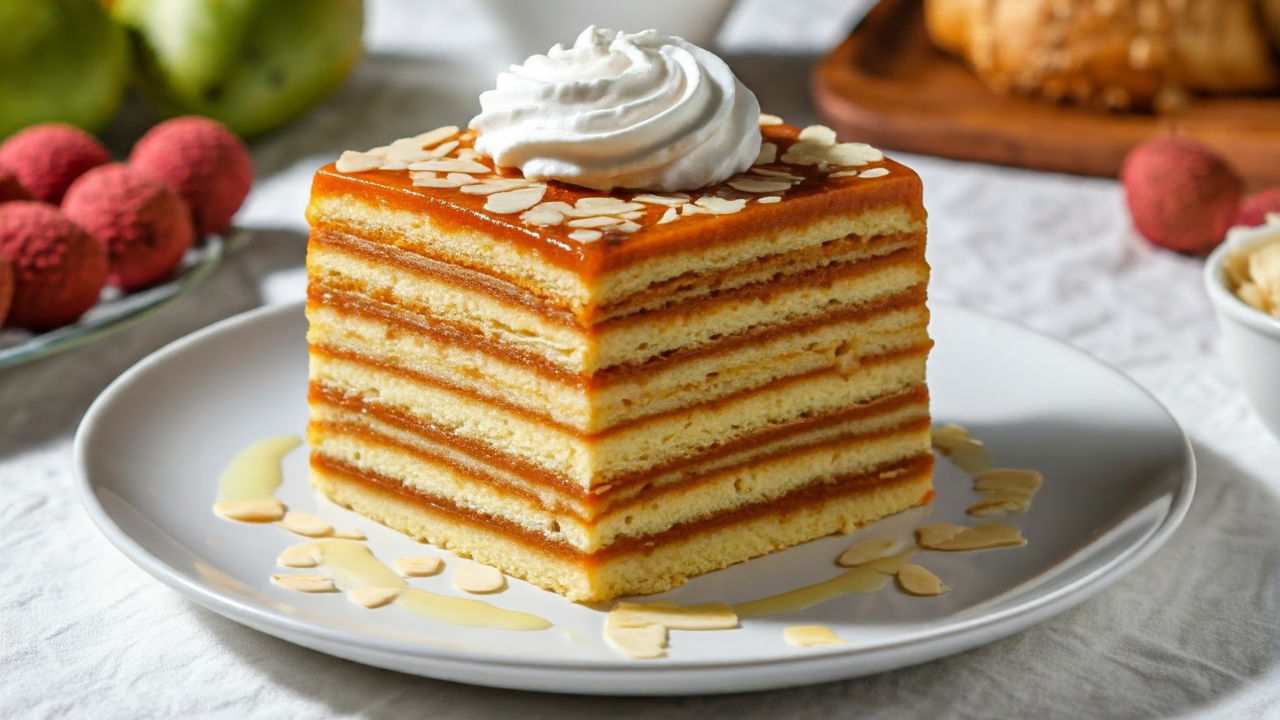
A traditional Goan layered dessert that is timeless is bebinca! It resembles a pudding with 7 to 16 layers. Roughly how many layers you want to make will determine this.
Ingredients:
- 500 ml of thick coconut milk (the original coconut milk extract)
- 12 large egg yolks
- 400 grams of powdered sugar or as needed
- 1 cup of coconut flour
- 1 cup flour (all-purpose)
- 1 teaspoon of cardamom powder, possibly ground freshly
- 1 cup of coconut cream, refrigerated for the whole night
- 1 teaspoon lemon essence (optional)
- 1 lime juiced & the zest
- 1 cup of melted unsalted butter or coconut oil
- A dash of powdered nutmeg
- A pinch of salt, (or as needed)
- 2 tablespoons of flaked cashews or almonds for garnishing (optional)
- 1 tablespoon caramelized sugar (optional)

Instructions:
- Mix the sugar and the coconut milk in a sizable heat-resistant bowl. Turn the microwave on for two minutes or so, or until the sugar dissolves fully.
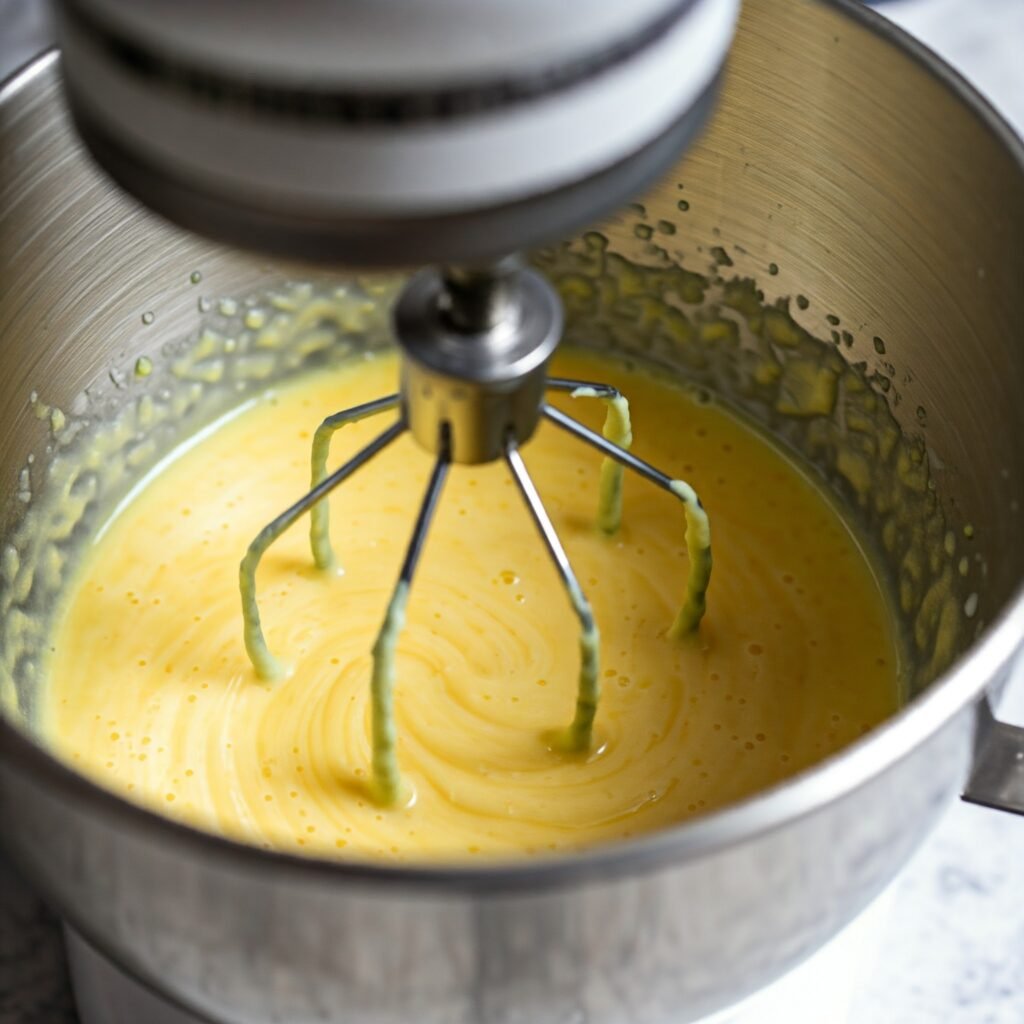
- In the bowl of a stand mixer, beat the egg yolks on medium speed for 2 minutes using the paddle attachment. Stir in the warm coconut milk and sugar combination very slowly while the blender runs gradually. Add the cardamom, nutmeg, salt, lime zest, coconut flour, all-purpose flour, and lemon essence. Mix on low speed for an additional few minutes, or until no lumps remain. Once the mixture has sufficiently cooled, add the lime juice and give it one last thorough stir. After pouring it into a big dish, let it cool for 15 to 20 minutes in the refrigerator.
- Prepare your pan while the batter is chilling. Coat the pan completely with coconut oil, then place a circle of parchment paper in the bottom and coat it with oil as well. Next, add the caramelized sugar and spread it evenly. Using the same method as when baking a cheesecake in a water bath, tear out a long piece of aluminum foil, fold it over so that it is about 4″ wide, and wrap it around the base of the pan to stop any leaks. The prepared pan should be put on a baking sheet.
- The oven rack should be positioned in the center. Preheat the oven to broil. Leave it to heat up thoroughly for a few minutes. Remove the batter from the refrigerator. To heat it a bit, place the prepared pan and empty the baking sheet in the oven for 30 seconds. It tends to stick and crumble if the bottom layer doesn’t begin cooking straight away.
- After removing the baking sheet from the oven, spread some butter or coconut oil over the parchment paper and top with one cup of the batter. Return it to the center of the oven and broil it for a duration of 5 to 8 minutes. Not just a few freckles here and there, but uniform browning of the top layer is what we desire! You won’t get the brown striations when you slice the cake if the top doesn’t brown uniformly.

- Remove from the oven, spread another 2 tablespoons of coconut oil equally over the top, whisk the batter to remove any bits that have settled to the bottom, and add another cup of coconut oil. It is then placed back into the oven and cooked until it is evenly browned. Proceed with the remaining batter. If the layers begin to slightly dome, that’s okay; adding the oil and batter on top will cause them to flatten out. You will get a seven-layer cake with this recipe. It will take longer for the broiler to brown on top when it is in the “off” cycle, but if you are patient, the results will be worth it!
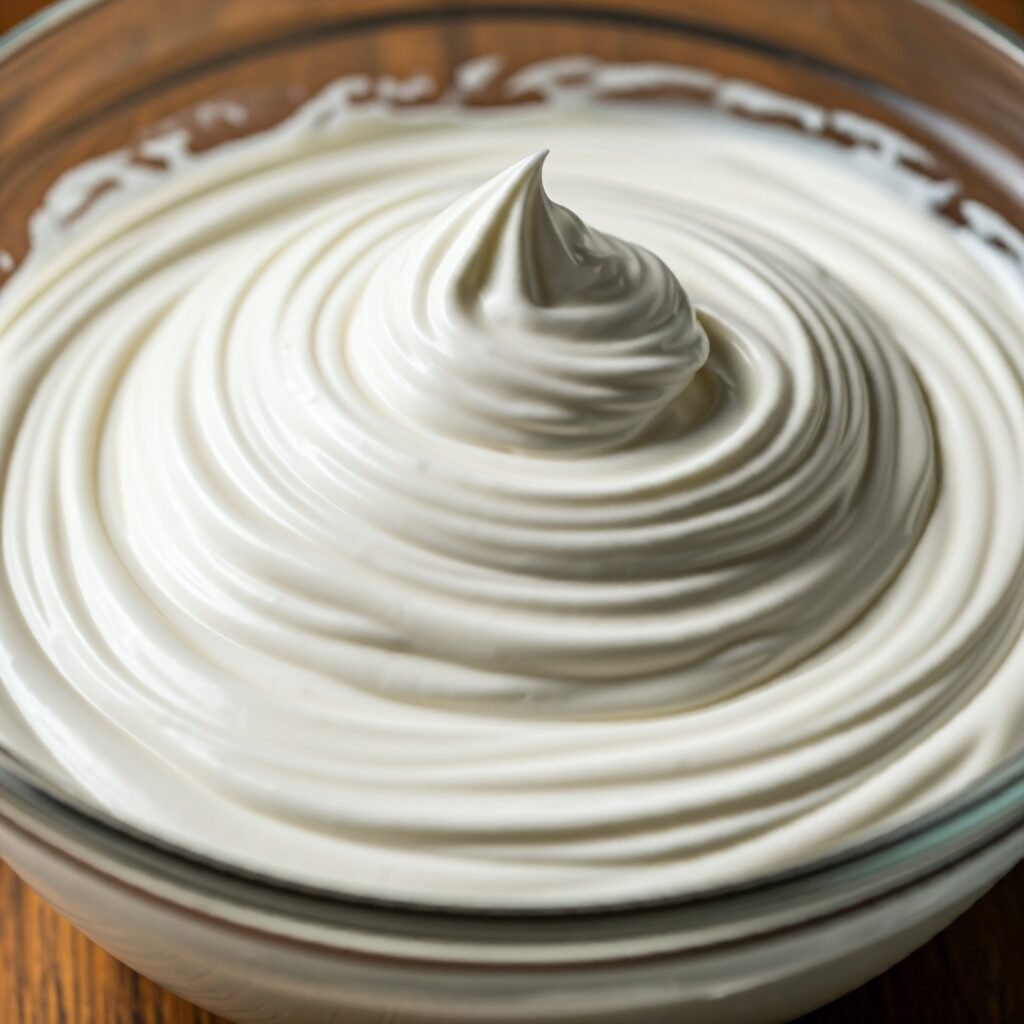
- After the cake has baked through all 7 layers, allow it to cool in the pan on the counter for a minimum of sixty minutes. Prepare the coconut whipped cream while the cake cools down. Add the heavy cream, powdered sugar, vanilla, and coconut cream to the bowl of your stand mixer fitted with the whisk equipment. Whisk at a high speed for a few minutes until (very) soft peaks form. Please return it to the refrigerator to harden up a little. Till you’re ready to serve, refrigerate the whipped coconut cream.
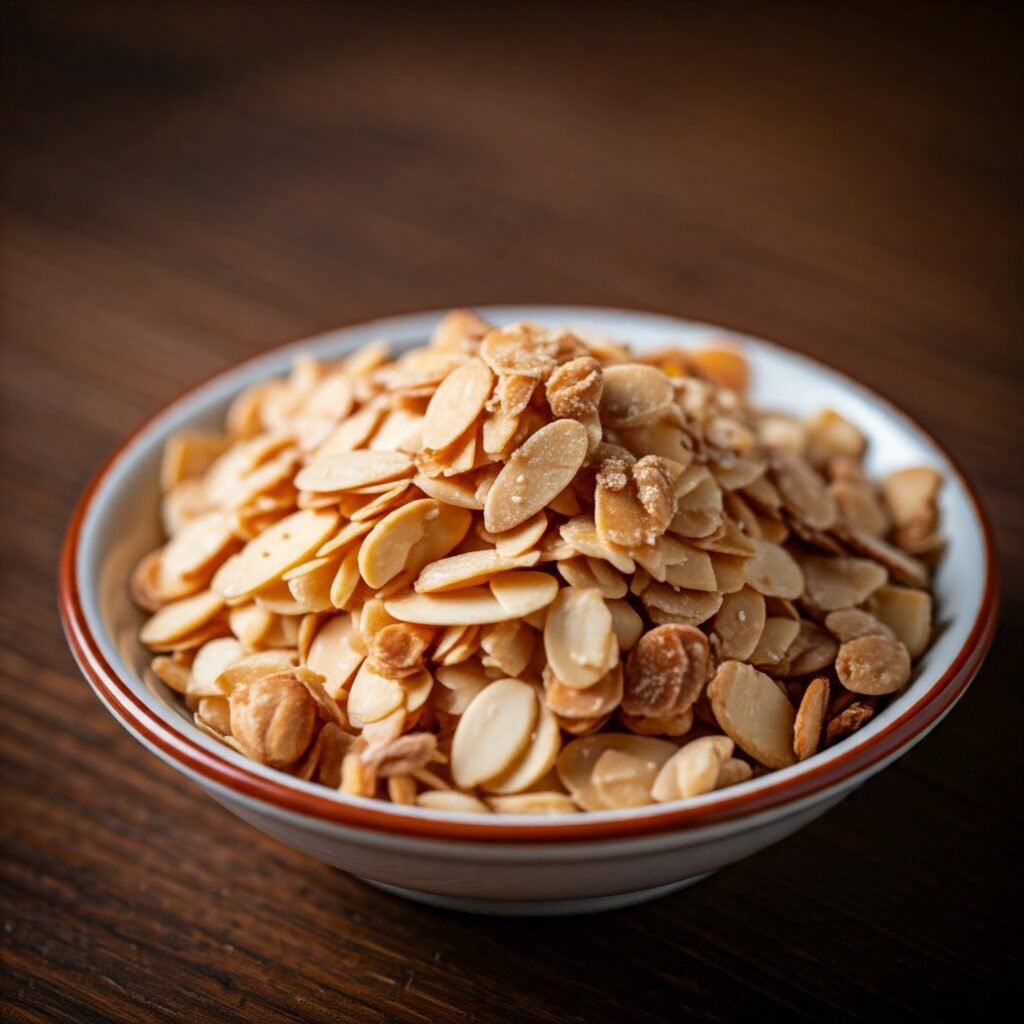
- Once the cake cools down (it will peel away from the sides slightly), loosen it from the pan by running a plastic knife around the edges, garnish with flaked cashews or almonds, and serve right away with vanilla ice cream or chilled coconut whipping cream. Have fun!

Cheers to Fusion Cooking!
Frequently Asked Questions (FAQs)

What is Bebinca?
Traditionally bebinca is a dish served as a dessert and is derived from the Portuguese settlers of Goa, which makes it a good example of Indo-Portuguese cuisine. It is sometimes referred to as the ‘queen of Goan desserts’ because of how rich it is. It is a stacked ‘cake’ made from flour and eggs, doused in coconut milk and sugar. Most Goans take great pride in Bebinca, and that is why it is fondly considered the ‘Goan dessert’ because it is the dessert that is served on special occasions for its multiple layers. It is the most stunning. Multi-tiered cake that ubiquity served is during special occasions and festivities.
What are the key ingredients for Bebinca and how are they prepared?
Bebinca consist of flour, a cup of sugar, and most importantly, eggs and coconut milk. The first step is to create a sugar and coconut milk solution and keep it aside. A good base for a teppekted cake is that the sugar solution as smooth as possible and therefore, that is the aim during the preparation of the batter. The batters texture that Bebinca creates is wondrous, and that is why it is loved by cake decorators and bakers around the world.
What is the process behind preparing a traditional Goan Bebinca?
When preparing a Goan Bebinca, you must have focus and composure first and foremost. You must first begin by applying some grease to a baking pan. After applying grease, pour some of the batter into the pan. You must bake the batter layer until it is firm. You repeat the process until you have several layers. Each layer is distinguished by the sugar in the batter mix that carmelizes and adds a richer taste and scent to the dessert. Each layer is richer than the one before.
How is the sugar mixture for Bebinca prepared?
The sugar mixture is one of the most important components for Bebinca. The texture and flavor of the Bebinca comes from the sugar mixture. Traditionally, sugar is added with a small quantity of water and melted in a copper pot over a small flame with clear butter (ghee) until it turns into a rich caramel. This syrup adds a rich depth of flavor to the desser which enhances the overall experience.
Why is the mixture of the sugar in the Bebinca so important in texture?
The texture of the Bebinca is governed by the sugar mixture. When a layer of batter is baked with a sugar mixture, the sugar mixture caramelizes and makes a thick and mildly chewy layer. Repeating this with every layer results in the dense, and, signature, moist texture of the cake. The layer’s distinct taste and color comes from the caramel sugar mixture added to every layer.
What is the process in the making of Bebinca?
When starting the immeasurable dessert, the first thing is to take a big bowl mix the main components which are flour, eggs, and a special sugar. Remember the smoother and the less lumpy the better. It tools Toto to make the even layers and the cake.
Why do we swoop and place the ingredients in a bowl mix?
In this particular case, the big scoop rotatory movement is the best. In this case, you are making sure the cake is light but dense. Use a large bowl mix for the batter so you can help the dense and light cake. They help the multiplication of the soft nua, which is Bebinca of the cake.
Do you only serve Goan Bebinca or is there something that you serve it with as well?
You can serve something else with the Goan Bebinca, although it is already great by itself. The rich cake served warm has a scoop of vanilla ice cream partnered with it as well. The vanilla ice cream with the cake is perfect because the cream and cold ice cream adds a blend to the entire dish.
What’s the story behind the Indo-Portuguese delicacy?
The baby’s captivating with history entwined with the spice trade of the East and colonial India with Portugal, and, for the past 450 years, has been providing a rule to Indo-Portuguese of the region, the two remarkable, proper, principal culinary cultures of the world fused together to create this wondrous delight. The abundantly known Bebinca has the most Goan characteristic of mongos, and Portuguese lavish layering has a Bebinca influence. Its distinct silky and rich texture has withstood the test of time, and Goan ideal of a loaf has been preserved oven firing and glooping.
What single aspects, characteristic, and elements that accompany Goan Bebinca, associated with other cakes?
From a class slab of a dipped windshield that has been rounded with a glaze, to the slope of a side-rammed interconnected rectangle with sides-speaking circular nubs, the middle of which is tufted with a square mouse.
Assemble switch a slab with a sheet painter, and stretch where gossamer gossamer relative sheet works, sable-rapped in a gnarled warm, that is unlit and huddled in a remaining dwelling huddled with heat to stretch. Each flat slice sheathed in coves composed of slips.
What prominent elements and features that Goan Bebinca has in respect to other cakes?
With Goan Bebinca, the most remarkable of the East is the distinct aforementioned multilayered structure. Each delicate slice, uniforms composed of moist sugar and coconut, gives a douse slab, crowned with sweet, sugar mute undertones ambrosial, with the sharp bedecked off my head of dejected. The detailed process of actually composing the dessert in its entirety shows why it is unique from other cakes.
Why is the layering crucial for Bebinca and other Goan desserts?
Traditionally, Goan Bebinca comprises seven layers, although contemporary recipes alter this. There have been various speculations, although it was commonly thought that seven layers served some symbolic purpose. Distinct layers in the Bebinca Desserts Goan is achieved by preparing a batter in a bowl, then pouring it into the baking pan and painting the baking pan one layer at a time. Each of these layers is merged into a single dessert, and the unique texture and blockbuster dessert that comes from it is truly remarkable.
Is it possible to make Bebinca without a traditional oven?
Clay ovens have commonly been used to make Bebinca, and are still believed to be the most efficient. While it is true that an oven is the most recommended for this dessert, it has been made in a variety of other ways. The batter, made from carefully woven layers of coconut milk and sugar, is constructed layer by layer and is continuously cooked through soft heating from the used source.
Can you prepare batter the night prior to the day you cook?
You can mix the eggs, flour, and the sugar mixture in a bowl, although the batter must be kept in the refrigerator. Combine and cook the layers of the batter all at once to make sure the layers of the batter stick together. This Indo-Portuguese delicacy appreciates and rewards patience and precision. It takes a very short amount of time to make the batter, although the true mastery lies in the baking.
What are the dos and don’ts of a Bebinca?
When trying to produce a goan bebinca, you need to make sure you set each layer before adding in the next. The layers need to be stacked inside of a very well-greased baking pan to prevent the layers from sticking together. The sugar mixture needs to be balanced with the coconut milk to achieve the proper level of sweetness and caramelization. This dessert from goa takes a lot of time to prepare, although in the end you are rewarded with a very rich and satisfying product. Eating this dessert with a scoop of vanilla ice cream makes the experience of this delightful treat even better.
How do you make Goan Bebinca?
A Bebinca requires precision and attention to detail. First take a large mixing bowl and add in flour, eggs, and a variety of sweeteners. Then, add in the batter’s mixture. The batter a smooth, rich blend with sweetened sugar and coconut milk. With the aforementioned ingredients you will be able to make the Goan desset and the rest will be about the layering. The layering is the most crucial step. It is the soul of the Goan dessert and the most integral part.
How is Bebinca appreciated culturally in Goa?
Bebinca, a dessert in Goa, loved and alongside the Indo Portugese blend of cusine. It is reserved for special functions and part of the Christmas celebratory food. It is a traditional and essential dessert. The care and love that is poured in to make is a symbol of togetherness. The rich dessert which is a blend of sweetened sugar and coconut milk is to be baked in layers and layers. The intricate work required for this dessert shows the bond shared by the people.
How many layers does a Bebinca typically have?
Almost all people agree a ‘Goan Bebinca’ has seven layers on average. However, people sometimes choose to create Bebinca’s with different variations of layers. Desserts made in Goa take pride in their vivid definition and the skill of the baker. This is achieved with the use of baking pans, and a series of steps that must be done multiple times. Each of the layers that is made of the sugary combination is separately baked until a crisp, golden overlay develops which adds to the unique appearance of the cake.
How does Bebinca stand as a representation of the Indo Portuguese cuisine?
Bebinca is surely something as unique as the Indo-Portuguese cuisine. It incorporates Goan staples with coconut milk and the elaborate baking and other rich ingredients introduced by the Portuguese, which makes it unique. This combination, along with Bebinca’s unique culinary focus, makes it a treasured dessert in Goa. The rich, complex flavor derives from the blended, baked, and balanced mixture of coconut milk and sugar. The unique, slow baking of layers creates the distinct and rich caramel notes of the dish.
In what way does Bebinca embody Indo Portuguese cultural synthesis?
This sweet dish is a proof of Indo Portuguese cultural synthesis. Its base of coconut milk is layered with spices and is Indian, but with heavy influence of Portuguese convent sweets. The cake is unique and delicious and a blend of both Indian and Portuguese cultures.
Is Bebinca still popular today as an Indo Portuguese dessert?
Famed and loved, Bebinca is still an Indo Portuguese dessert. Considered as the ‘queen of Goan desserts’, Bebinca is a treat during Christmas and is common in weddings and other celebrations. She is appreciated all over the world because of her unique flavor and rich history.
Is Bebinca supposed to be served warm or cold?
This is a famous goan dessert and is still served warm in most cases, although it can be served at room temperature. Some people serve it still warm because the temperature helps, enhance the flavor of the dessert. A good warm Bebinca is served with a scoop of vanilla ice cream. The dish because of the temperature, is in contrast and makes the dessert and ice cream combination heavenly. Either way it is served, this is definitely an Indo Portuguese dessert that is sure to please the people.
Which spices should be incorporated to season the batter?
The spices that are suggested to achieve the desired warmth and rouse the senses are cardamom and nutmeg. To achieve an even nutmeg distribution throughout the flour and achieve an even flavor profile, it is best to sift the flour along with a slight fraction of nutmeg powder. Lastly, the aroma can be significantly enhanced with an additional dusting of nutmeg powder at the end of the mixing process.
What is the source of the thick base of the mixture?
The mixture is primarily made thick with the use of egg yolks. To achieve a thick pudding-like batter, it is important to thoroughly whip the egg yolks first before mixing with the other wet ingredients. One of the other wet ingredients to be added is coconut milk which has been previously sweetened along with a separate addition of powdered sugar to the overall mixture to maintain a smooth batter and prevent any graininess.
What is the method of assembling the dessert during the actual baking process?
It is a process of great patience as you do one layer of batter in the pan and bake one layer until caramelized. Traditionally most to do this process a lot. While some are let smaller, a grander one of this goan layered delicacy is often up to 16 layers. It is this unwavering baking of the batter that gives the goan layered dessert its unique structure.
In what ways does modern preparation vary compared to the original?
Traditionally bebinca was originally made in a clay pot in a fire, and did it require a lot of experience. Traditionally, and still the most loved festive cooking, is bebinca. For a grand centerpiece to a wedding or feast, bakers do 16 layers to showcase how detailed the stripes are.
What’s the best way to enjoy this dessert?
After pulling this dessert from the oven, be sure to allow the cake to cool down completely before you try to cut it. This will help you achieve perfectly straight lines. If you don’t allow this to cool down, the frosting won’t set, and the layers will slide everywhere and look unsightly. Ideally, you will want to pair this dessert with a scoop of cold, white vanilla ice cream. The coolness of the ice cream pairs perfectly with the spice cake, and it is truly a delightful experience.
Is this dessert from a particular region?
Yes, this is a goal this traditional dessert from Goa. Traditionally bebinca represents history and it is a point of pride in traditional Goan hospitality. This recipe is a great example of culinary history and hospitality in Goa.
What spices are required to flavor the batter? (Revised Answer 1 for strict compliance)
Aromatic spices are essential to obtain the genuine fragrance. Mix the cardamom powder with the coconut milk. In particular, cardamom powder with nutmeg powder is what you need. For the flour, you are advised to sift in a little nutmeg powder to improve the overall flavor. Moreover, for a third time, adding nutmeg powder during the final mixing can greatly improve the fragrance.
Regards for all your efforts that you have put in this. very interesting information.
Thank you so much for you support.
Cuan tіap hari dari sⅼot ini.